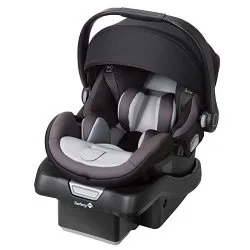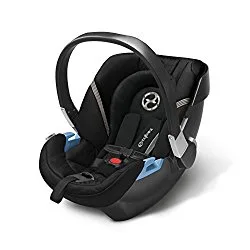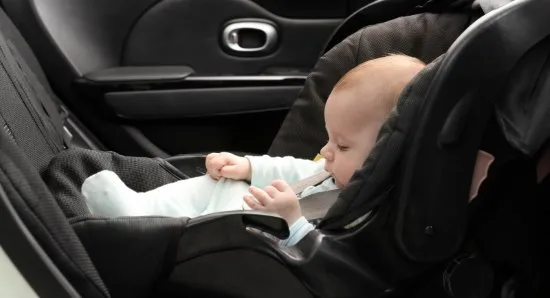
The best infant car seat reviews showcases our top choices for your family to consider. It presents a well-rounded look at all the features of various car seats and provides an honest assessment of what does and doesn’t work on the leading models. For each product the key characteristics are analyzed to create a thoughtful review that helps you not only find the best car seat for your baby but also save time and money.
We ask the tough questions:
- Which car seats provide the safest ride for infants?
- Which are the most comfortable for babies to ride in?
- Which car seats provide the most value for the money?
- Which are the most user-friendly to install and use daily?
- Which have the largest weight and height limits to allow for extended rear-facing?
Parenting is hard. You shouldn’t have to worry if your child is safe and comfortable in the car. A car seat is one of the most important investments you’ll make for your baby. But would you believe that you don’t have to spend an arm and a leg for a great seat?
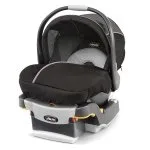
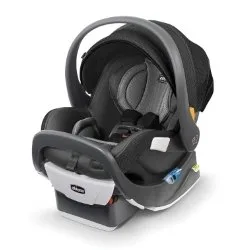
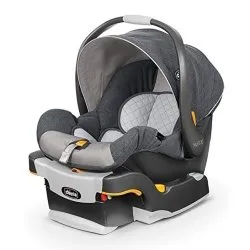
Take the Chicco KeyFit 30 for instance. It costs less than several designer models and is our highest rated seat. Discover why in our mini reviews below and for even more information on each model check out their detailed review pages.
Height and Weight Limits for Infant Car Seats

The height and weight limits for infant car seats vary by model with many of them topping out at about 25 - 30 pounds. Parents should remember that the AAP (American Academy of Pediatrics) recommends that children ride rear-facing for as long as possible (up to 4 years of age). As a result the car seat manufacturers are designing infant seats with higher weight limits up past 35 pounds. This allows extended rear-facing well past 2 years for most children but also complicates the fit for smaller newborns.
What other Car Seat Types Work with Newborns?
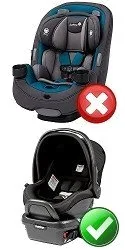
The most popular option is a convertible car seat. Your child will grow fast and these car seats grow right along with them. They easily convert from rear to forward-facing and some models, called 3-in-1, even convert to booster seats. Parents see convertible seats as a good bang for their buck since they’ll only have to invest in one seat.
However, most convertible seats aren’t recommended for infants. Before your child turns a year old, a specialized infant car seat is recommended. Many convertible seats don’t provide a snug fit for preemies or small babies up to 8 pounds.
In the first few months, your baby’s bones and muscles are very delicate, especially those in the neck and spine. Infant seats provide a snug fit that is designed specifically for protecting those vulnerable areas.
Even more, it’s very handy to have a seat you can “grab and go” as an infant carrier. This is one of the best benefits of infant seats. With an infant carrier you can get your baby in and out of the car easily without waking her up or exposing her to the elements. Convertible car seats with their harness buckles don’t work smoothly like that.
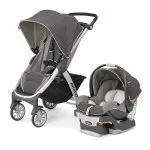
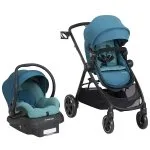
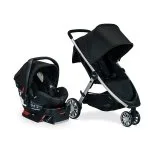
The other great car seat option for parents to consider is an infant car seat/stroller combo. In these models the seat can be attached to the stroller without removing the baby from the car seat. Also called travel systems, they’re perfect for parents on the go that like to quickly snap the baby into a wheeled stroller for walks inside a store or around the neighborhood.
Car Seats for Infants: Our Ratings & Reviews
How to Find the Best Infant Car Seats
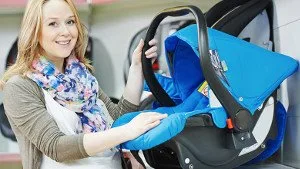
Take a moment to imagine this scenario:
It’s here! The day you’ve all been waiting for – the day you get to meet your new baby face-to-face. Everyone is excited to hold her. At home you have got all her clothes washed and ready, her crib’s all set up. The changing table is fully stocked with diapers, sweet-smelling baby wipes and baby lotion. All that is left to do is install the car seat you got at your baby shower so you can bring your baby home.
Except, when you try to install it, you discover it barely fits. The LATCH straps won’t reach the hooks in the rear seat. It’s impossible to get the car seat angled properly so the baby's head doesn't slump forward or to the side. And no matter how hard you and your husband yank, you cannot get it strapped tightly enough to stop the seat from flopping around on the backseat. There’s no way you can bring your baby home in this car seat! That just won’t work.
Now you have to rush out and buy a new car seat so the hospital will let you take her home. Chances are, in your haste, you’ll spend way too much on a seat with bells and whistles you don’t need. The one good thing in this scenario? The first seat was a gift, so at least you’re not out the money twice.
Your best bet: start shopping well before the baby arrives so you save yourself a lot of time, money, and frustration.
Pro-tip: Pick out the car seat you want now that you know will fit and then add it to your baby registry!
The Basics - Four Top Things to Look For In an Infant Car Seat
Okay, so where do you start? With all the products on the car seat market today, it’s difficult to find one that will work for your family’s specific needs. Rest assured, however, that there is more than one seat out there that will provide a safe and comfy ride. Here’s what you need to consider to help you make a smart choice.
- What’s your budget? You can find a great seat no matter what your price range, so don’t assume more $$$ means better quality. Yes, your baby deserves the very best, but she needs a lot more than just a car seat. All those little necessities can add up quickly.
- How big is your vehicle? Just like people, car seats come in all sizes. Some are just too bulky to fit in compact and other small cars. If you need multiple seats, it’s even more important to know if they’ll fit in the backseat. If you have a small car then be sure to measure the backseat and compare it to the car seat dimensions.
- How safe is it? Every car seat on our list has passed tough standard federal safety regulations. Seats will often boast about added safety features like crash foam or anti-rebound bars. Remember that these features aren’t federally regulated, so there isn’t any government testing to show if they actually enhance safety.
- How easy is it to use and install? Did you know that an estimated 95% of parents make at least one mistake while installing and using infant safety seats? Seats that are super simple to install and intuitive to use are much less likely to be used incorrectly. Not all latch is created equally and some seats are a lot easier to install than others.
In regards to safety, sure, crash test results are important, but remember this: Car seats are only safe if they are installed and used correctly. This is why we think that ease of use is a huge factor in determining which car seat to buy. The easier a seat is to use, the more likely it will be used correctly and the safer your baby will be.
Other Things to Look For in an Infant Car Seat

What, there’s more? If you only follow the 4 basic considerations, you’ll still find a great seat. But there are some other things to look for that will ensure you’re getting the cream of the crop when it comes to infant car seats.
Easy to use buckles, clips and LATCH system
Every time you put your infant in a car seat, you’ll be using a harness and chest clip. You’ll have to tighten the straps enough to secure the baby. Look for clips, buckles and straps that are simple to use and tighten. They should be intuitive enough to use without having to consult a manual. No-rethread harnesses are wonderful for adjusting the harness height as baby grows.
Tightening the harness should be a smooth and easy process that you can preferably do one-handed. You don’t want to dig around for a strap tightening handle that’s hidden somewhere behind or under the seat. A one-strap, front-adjust tightener like the one on the Graco SungRide35 lets you tighten the harness quickly and easily with one hand.
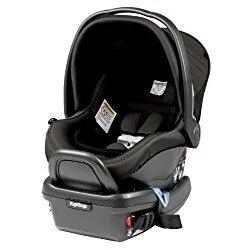
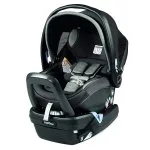
Installing the car seat LATCH straps to your car’s built-in LATCH system shouldn’t require a superhuman feat of strength. Look for push-on connectors rather than clip-style LATCH. Push-on connectors like those on the Peg Perego Primo Viaggio 4/35 will save you a lot of sweat and tears.
Seamless transition from base to carrier to stroller
“Let sleeping babies lie.” If you’ve ever had a sleepy, grumpy baby on your hands, you’ll understand why this old adage applies. One of the main benefits of an infant car seat is that it can be used as an infant carrier so that you can put baby in and out of the car without waking her.
The seat should be easy to remove and it should attach to the base with just a click. It should be lightweight so that the added weight of the baby doesn’t make your arm fall off. If you need to carry it for long distances or switch cars often, this is super important.
It should also be easy to snap onto a compatible stroller securely. Infant car seats with release handles on the seat itself instead of on the base are usually a lot easier to manage.
Practical, easy-to-clean fabrics
Babies are messy little creatures. At a minimum, you’ll want to clean your car seat every 2-3 months to remove drool, sweat, and any diaper leaks. Most car seat covers are machine washable. Not all are machine dryable, but so long as you’re not in a rush, hanging to dry isn’t a big deal.
The big thing to look out for: How easy is the car seat cover to remove and replace? Check out reviews to see what parents say about their experience. You’ll be thankful to have the most fuss-free car seat cover you can buy.
Black fabric will hide stains better, but there are a wide variety of colors and patterns depending on the brand of car seat. Even the budget-friendly seats have a nice selection. The premium-priced seats usually have the best quality fabric and padding. High quality fabric is likely to tear, pill and fade. However, we’ve found that breathability doesn’t depend much on price.
What To Avoid In A Car Seat for Infants
Secondhand Seats
Try to avoid secondhand seats at all costs. Even if you know the person they belonged to, you can’t guarantee there isn’t some invisible damage. Over time, small tears and breaks happen that render the seat less safe than it was before.
Never use a car seat that has been in an accident. Even if it looks okay, toss it out. There could easily be unseen damage that would render it ineffective in another accident.
Toxic flame retardants
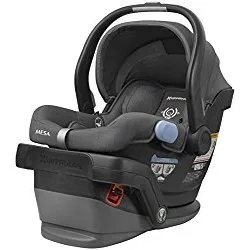
Everyone wants to keep their babies away from toxins. All car seats must be treated with flame retardants, but some are safer than others. It’s hard to find this information, but if you can, try to avoid flame retardants that are brominated. Car seats such as the UPPAbaby MESA (Henry version) are naturally flame retardant without harsh chemical additives.
Turning forward-facing too soon
Children are 70% safer riding rear-facing than forward-facing. Do your best to keep your baby rear-facing beyond her 2nd birthday and up to 4 years of age, as the AAP now recommends. Why? Because young children’s growing bones (especially in the neck and spine) are delicate and prone to severe injury in forward-facing crash forces. A rear-facing seat better surrounds the head, neck and spinal column and absorbs more crash forces.
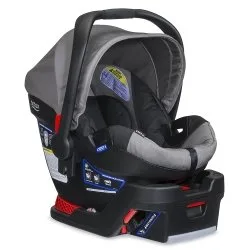
One option: Buy an infant seat with a higher weight limit such as the Britax B Safe 35, then when your baby grows out of it, buy a convertible seat that has even higher rear-facing weight limits such as the Diono Rainier 3-in-1.
Car seats are not cribs
The AAP recommends not using car seats for sleeping in general. Sure, it’s fine to let baby sleep in the car or while you’re shopping. But for regular naps and bedtime, a crib is the safest place for your baby. Baby’s airway can be more restricted in a car seat. They can also overheat, and their heads could develop flat spots if left lying too long. Car seats become a hazard when babies sleep in them unclipped or at awkward angles.
Types of Infant Car Seats
You’ll see many types of infant car seats listed on our site and in stores. What you buy will depend on your preferences, budget and child. In some cases, people who have smaller or larger infants can’t use just any seat. For instance, a preemie of 4 or 5 pounds will fit best in a seat that fits small babies well like the Chicco KeyFit.
Here are some of the terms you’ll see on various models so you can better tell what you’re looking at when shopping. There are four main types of seats.
1. Rear Facing Only
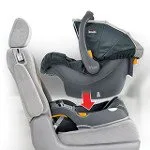
Rear-facing only seats (or infant car seats) are designed for infants weighing as little as 4 pounds up to 30-40 pounds, depending on the model. These seats are smaller, typically attach to a base and have handles for carrying. This base can be moved from car to car, but the carrier is the selling point – it allows you to carry your child around without disturbing her.
Infants sit in the “cradle” of the seat and are secured using a five-point harness. Almost every model of infant seat includes a head support pillow or system to keep baby’s head from slumping. Infant seats can recline and can be adjusted for comfort.
2. Convertible seats
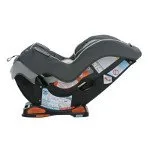
Convertible seats are just what they sound like – seats that can be converted. In most instances, they go from rear facing to forward facing and sometimes even convert into a booster seat.
They tend to be bigger and cost more than rear-facing only seats. They don’t have a detachable base or carrying handle. Many people decide to start with an infant rear-facing seat and then switch to a convertible. However, starting off with a convertible seat can save money in the long run since you’ll be using it much longer.
It is important to note that using a convertible seat means you have to pay particular attention to strap placement and recline. These will need to be adjusted in each different mode. You’ll have to check the settings regularly and consult your user manual to ensure everything is in the right position.
3. All-in-One seats (sometimes called 3-in-1 or 4-in-1)
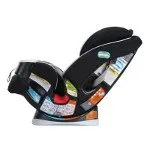
All in one seats can be used as a rear-facing seat, a forward facing seat, and as a belt-positioning high-back booster with the harness removed. Sometimes, you will be able to find an all in one that also converts to a backless booster with weight limits up to 120 pounds. Occasionally, you’ll see one with a booster mode that uses a harness, but they are pretty rare. These seats pass all necessary safety ratings but sacrifice some comfort for the increased versatility.
4. Travel Systems
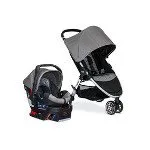
Also called car seat / stroller combos. Several of the infant car seats you’ll see here can either be bought alone or as part of a travel system. As a travel system the seat will simply click onto the stroller. You may already have a stroller and find this redundant but many parents like the convenience. However, keep in mind that not all infant seats are compatible with all strollers, as is the case with the UPPAbaby MESA, which only fits the Vista and Cruz UPPAbaby strollers. There are different stroller models depending on your lifestyle, including 3-wheeled, 4-wheeled, jogging and double strollers.
There are different stroller models depending on your lifestyle, including 3-wheeled, 4-wheeled, jogging and double strollers.
How to Install An Infant Car Seat
There is no one set way to install a car seat. You should always thoroughly read the manual before doing anything. Good manuals will have clear directions in many different languages as well as models and diagrams that you can use. If you’re still having trouble installing the seat, look for tips and installation videos on YouTube or the manufacturer’s website.
If you still have issues, try asking someone at the local police station, a pediatrician, a hospital, or even a baby store to help. Often, they will have staff who specialize in installation. You can always call the manufacturer’s customer service line if you have any questions as well.
Where
The best place for a child’s car seat is actually in the middle of the back seat. This will prevent many injuries if your car is hit on the side. It will also prevent your child from playing with the window buttons and door locks. If you cannot put your child in the middle, it is better to put him or her behind the passenger’s seat if you drive the car alone.
If there are always two people in the car, then you can put them behind the driver. However, the passenger’s seat side allows the driver to check back occasionally without taking his or her eyes off the road for too long. In an emergency, it also allows the driver to check on the baby as soon as he or she can. City drivers might prefer children behind the passenger seat so that they can load and unload without being in traffic.
When
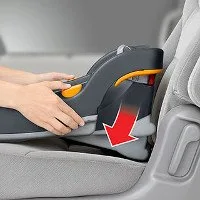
Ideally, you want to install your infant car seat well before your child is born. You will need it to take your baby home from the hospital. The hospital will not let you leave until they know you have a car seat safely installed. You don’t want to be fiddling with installation when it is time to go home.
Installing early will also give you time to drive around to ensure the base and the seat are attached securely. If you can find a doll that’s the same size and weight of a newborn to use as a test subject, even better. Go around a few corners to see how the seat moves. If it tips, slides around or rattles too much, you may have to make some adjustments. Tighten your car seat to give it a snug fit.
For extra security, go to your local car seat technician, pediatrician or police station to have the seat checked by someone who can confirm if you’ve installed the seat correctly.
More Than One Car Seat
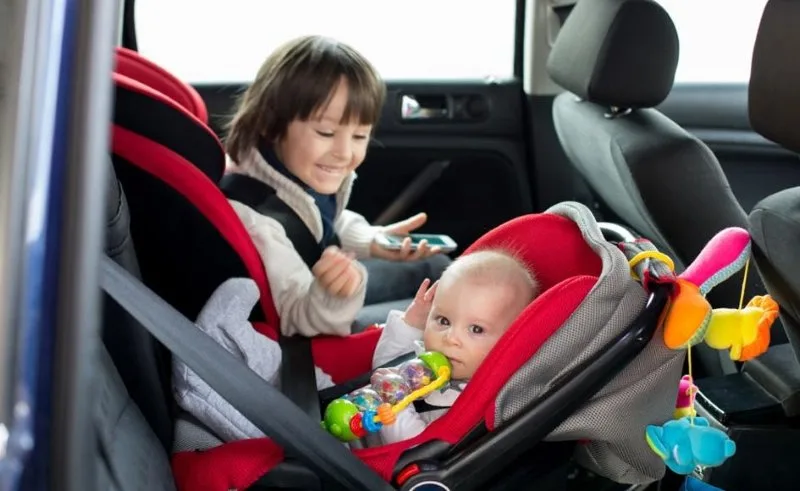
A big challenge for lots of parents is when the second car seat arrives in the back of the car. Parents shopping for an infant car seat that already have older children must take space into consideration.
If you need to install more than one car seat and have an older child in a forward-facing or booster seat, try to put the older child in the middle instead. Forward-facing and booster seats don’t protect as well as a rear-facing infant seat, so the older children will be safer in the middle.
It can be difficult to install more than one seat in the same car, especially side by side. If you leave an open seat between two car seats it will make installation a lot easier. Manufacturers will place latch anchors at every seat but often times they will be so close together that you cannot use adjacent anchors to install seats next to each other.
Find the dimensions of your car interior and the car seats before buying so you know if they’ll fit. Some car seats, particularly convertible models, are bulkier than infant seats. Look for compact seats with a narrower profile, such as the Chicco Keyfit 30.
You can find specific vehicle dimensions and read more about fitting multiple car seats in the back of a car in our recent blog post on narrow car seat options. In that post you can also find information on captains chairs, third row seating, and vehicles that can fit three car seats across the back seat.
 Our Choice