The best toddler booster seats are those that keep your toddler safe while still comfortable. Though age and size limits depend on the model, booster seats generally start at a minimum of 4 years old and at least 40 pounds.
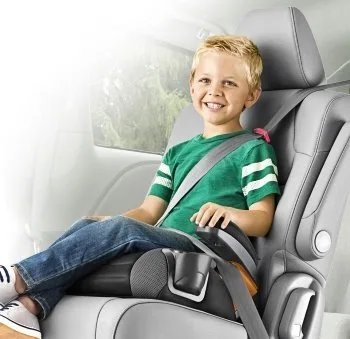
Backless booster car seats depend on your vehicle’s seat for head and back support and the vehicle seat belt for restraint. Their main function is to boost the child’s height so the seat belt fits properly. Most have no other installation mechanisms, though some boosters have a LATCH connection system to provide extra stability.
Many of the high back booster seats come with a harness system, so they’re a good option if you’re on the fence about a backless booster. Plus, if you have a car with no headrests in the back seat, a high back booster is necessary. Feel free to browse our high back booster seat listings to see if one is right for you.
To determine if your child is ready for a backless booster:
- Has your child outgrown the manufacturer's recommended size limits of his current car seat?
- Is your child 4-8 years of age and at least 35 inches tall?
- Are they 40-80 pounds and under 4 feet, 9 inches tall?
- Can he NOT yet sit with his back straight against the vehicle seat while his knees bend completely over the edge?
- Is it obvious that the vehicle seat belt alone doesn't fit where it would on an adult?
- Does your back seat have headrests that are higher than your child’s ears?
If you answered yes to all those questions, you’re probably okay to go shopping for a backless car seat.
Backless Booster Rating of 2020
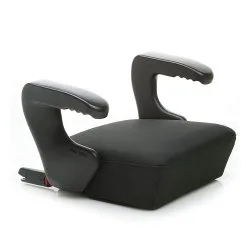
Clek Ozzi
Price: High
The Clek Ozzi Backless booster seat accommodates children 4 years old and up from 40-120 pounds and between 40 and 57 inches.
What we like
The plush fabric is removable and hand-washable. Beneath the cover lies energy-absorbing foam plus a thicker foam cushion to prevent “numb bum.” Fabric wraps around the underside of the seat to protect your vehicle upholstery from scratches and snags.
There are several accessories available for purchase separately, such as a carrying strap, drink holder, cleaning kit, travel bag and seat mat.
Worth knowing
Firstly, this booster seat is about twice the price of most of the seats on our list. Some parents said it was really hard to attach the seat to the lower anchors with the rigid-LATCH system. Plus, there’s no strap on the front to release it, so switching the seat between vehicles can be a challenge.
The sleek design is nice for bigger kids who don’t want the cutesy seats, but several parents hated the big warning sticker that’s on the front of the seat, which is not shown in the product pictures. The biggest downside we found was the lack of accessories included. This one is barebones, and you have to special order all the extras from the company.
What parents say
Overall, this is a sturdy, safe and comfortable booster seat, especially for long drives. If you don’t have to switch the seat between cars often and don’t want a lot of accessories, it’s a great investment.
Alternative Models
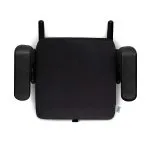
At nearly 2X the price of the Ozzi, the Olli is an upgraded model with stain-resistant fabric, 3 color choices, and a quick-release LATCH strap. It includes a cup holder and carrying strap.
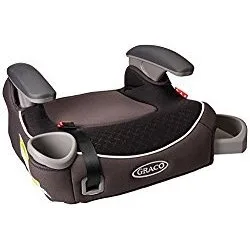
Graco Affix
Price: Average
The Affix is one of the easiest boosters to use, making it perfect for busy families.
What we like
Of all the seats we reviewed, the Affix is one of the easiest backless booster seats. Everything is easy to set up, easy to adjust, and easy to move. It’s only 5.6 pounds, so if you can lift a bag of sugar or a toddler, transferring it between vehicles isn’t strenuous. Installation takes all of 14 seconds with a one-handed LATCH strap you can tighten from the front of the seat.
An integrated cup holder keeps drinks close by and secure, while a sliding storage compartment holds extra snacks, earbuds, and handheld games. The seat pad is machine washable, which is always a big plus.
Worth knowing
Several parents noted the cupholders were missing upon delivery. However, we discovered that the cupholders are usually stored in a slot under the seat itself, so be sure to check there.
Other parents had issues getting the straps equally tight on the car’s LATCH anchors. Plus, the connectors are the older hook style rather than the easier push-on connectors. The LATCH straps may also be too short in some vehicles such as the Toyota Tundra.
Be sure to check all parts, and if anything is missing or malfunctioning, call Graco for a replacement.
What parents say
Overall, parents love how easy the Affix is to use. It’s light, affordable, and includes a LATCH system, which could make it safer than those without. An excellent choice if you’re taking your first foray into booster seat territory.
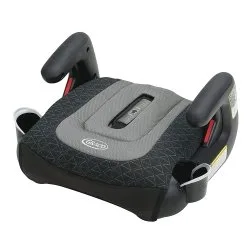
Graco TurboBooster TakeAlong
Price: Average
The Graco TurboBooster TakeAlong is one of the newest models on the market.
What we like
The seat padding is machine washable. Two cup holders swivel in when you don’t need them. Padded armrests are height-adjustable and act as seat belt positioning guides.
An included carry bag plus fast-action fold, which makes the seat 50% smaller, makes this a very portable seat. It’s great for travel in cabs and Uber rides.
Worth knowing
Like most booster seats, this one does NOT include LATCH straps. It will depend on the vehicle seat belt and your child’s weight to remain in place.
Parents found the cup holders to be too small with parts that kids often removed and lost. A few thought the seat wasn’t padded well enough for long rides. There are also some tabs on the back of the seat for adding an optional high back that are tricky to remove and prevent the seat from sitting totally flush against the vehicle seat back.
What parents say
The most annoying thing about this seat was the tabs for an optional highback. If Graco had simply included these in the package instead of having them installed on the seat already, this seat would be pretty much perfect.
Alternative Models
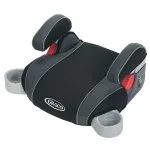
For about $10 less, the original TurboBooster backless booster is still a very popular model. It does not fold up like the TakeAlong, but comes in 4 different colors/patterns.
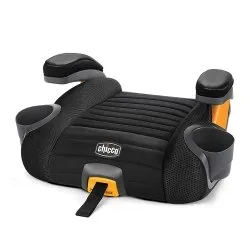
Chicco GoFit Plus
Price: High
If there’s any booster seat easier to install than the Graco Affix, the Chicco GoFit Plus is it.
What we like
Easy install and uninstall is the name of the game here. Not only are there easy-to-attach push-on LATCH connectors and a one-handed tightening strap, but there’s a quick-release design to remove the connectors in one pull of the handle.
Add to that the machine-washable seat and armrest covers, the built-in carry handle, and the shoulder belt clip that positions the seatbelt just right, and you’ve got one easy-to-use booster seat. Plus, 2 removable, dishwasher-safe cup holders fold in when you need some extra space.
Worth knowing
The GoFit Plus is about twice the price of average backless boosters. Though it does have a carry handle, it doesn’t fold up or have its own carry bag for easier transport. It can feel a bit heavy and bulky if you have to carry it around very long, but should fit into a suitcase, large backpack or stroller just fine.
The shoulder clip for positioning the shoulder belt can be a little tricky to use, so be sure to consult the manual and/or look for video tutorials.
What parents say
For families who need to switch cars and seating arrangements often or those who use cabs and Ubers, this is a really good option. It’s still fairly new on the market, so there’s not a ton of customer feedback yet.
mifold Grab-and-Go
Price: Average
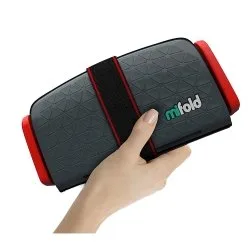
The Mifold Grab-and-Go is by far the most unique seat on this list.
What we like
If you’re always on the go and switching vehicles, you should definitely consider this seat. You can fold it up and store it practically anywhere, like backpacks, purses, glove compartments, etc.
This seat could be a great option for smaller, compact cars that don’t fit other booster seats well. It’s also a good travel option for cab and Uber travel. There are side adjustments that widen the seat as the child grows (S, M, L), which also changes the positioning of the lap and shoulder belts.
Worth knowing
This seat is a new invention from a recent start-up company. Though fully safety-tested, we’re not sure how well they tested comfort levels. It looks as though it would be comfortable from the way it sits flat against the seat bottom, but several parents said their children complained about it being uncomfortable.
Other parents said they could not figure out how to use it, while others said their children couldn’t buckle it and couldn’t release it without help. If you’re a booster seat novice or take long road trips, this seat may not be for you.
What parents say
Many parents love this seat because it is so portable and light. But the comfort level is questionable, as is the ease of use. The company does have several instructional videos that could be very helpful if you’re willing to give this new design a try.
Hiccapop Uberboost
Price: Average
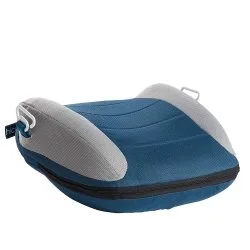
This affordable seat with the cool name is the only inflatable booster seat on our list.
What we like
Portability and lightweight design is the main pro for this seat. It won’t take up much room even when inflated, so it’s good for compact cars or installing between full-size car seats. A non-skid base holds it in place so there’s no sliding.
Belt positioning clips on the side get the lap belt in the right place over the child’s lap. The air-filled cushion is comfy for long rides. Comes with a patch kit for hole repair.
Worth knowing
Some seats may have to be reinflated often, and with any inflatable object, you always have the risk of holes. For those with animals in the car or kids with pencils or roughhousing, the risk is higher that this seat will spring a leak.
The seat belt clips are also pretty flimsy. While they’re easy to use, a very wiggly child may dislodge the seat belt from the clips.
What parents say
This seat makes a good occasional travel seat, but not a good everyday seat because of the issues with deflating and holes. It’s cheap enough that you could buy one or more for a few road trip vacations, but don’t expect many years of use.
Not sure whether your child’s ready for a booster seat?
Your kid may be in that in-between state where it’s hard to determine if they’re big enough for a booster seat. When to start using a booster seat will depend on local regulations and specific manufacturer’s guides. Visit SafeRide4Kids.com to see what your state laws are regarding booster seats.
However, vehicle belts are designed to fit 165 lb. males, therefore even with a booster seat, the vehicle seatbelt may not provide the safest fit. That's why experts recommend children remain in a harnessed seat for as long as possible. That 4 year old minimum age is probably best suited for those with larger builds who can be trusted to stay buckled and still.
Common myths about booster seats

If you ask two different caregivers about when a child is ready for a booster seat, you’ll likely get two different answers. Some people don’t think they’re needed at all, whereas some think as soon as a child is 4 years old, they can use a booster. Let’s dispel some of those misconceptions:
Myth: My child can use a booster as soon as they meet the minimum height and weight requirements.
FALSE. Children grow physically and mentally at different rates. While one child may be the minimum size at 4 years old, he or she may not be mature enough to sit still in a booster seat. Other children may be mature enough to sit still, but too short or light to be safe in a booster seat. Waiting until your child is at least 5 years old and is able to sit still for the duration of a trip is the safest bet.
Myth: State law says I can let my child ride without a booster when she’s 8 years old, so I should trust that.
FALSE. Laws vary from state to state. Some state laws say children can go without a booster at 5 years old, while others say a child must ride in a child restraint until they’re 10 years old. This can be a problem for interstate driving if you’re pulled over. Best (and safest) practice is to use a booster until 10-12 years old and at least 4’9” tall. That will cover regulations for all 50 states and Canada.
Myth: A high back booster is safer than a backless booster.
FALSE. If you have a car with low seat backs or no headrests, you have to use a high back booster. No exception. Opt for a high back booster if the shoulder belt doesn’t fit properly (diagonal across the chest, not the neck), if she slumps while sleeping, or can’t sit safely still in a backless model.
Myth: Lower anchors can’t be used with booster seats.
FALSE. As you can see in our list above, several backless boosters come with LATCH systems just like those in infant and high back boosters. They can help stabilize the seat to make it easier for the child to get in and out and buckle herself in.
Myth: You don’t need to replace booster seats after a crash.
FALSE. Some booster manufacturers build seats that are compliant with NHTSA reuse guidelines. However, just like with other car seats, if you’re involved in more than just a bumper tap, it’s better to be safe than sorry and replace your booster seat.
Should you choose a high back or backless model?
High back booster seats tend to provide a better fit for the shoulder belt, since they have a built-in belt guide at the top of the seat. This is especially true for the younger toddlers. While a belt clip on a backless seat may properly hold the shoulder belt in place, if your child is wiggly, the clip could come loose and be useless.

- Pros of high back booster seats
- Headrests provide head and neck support for sleeping children, and another layer of protection in a crash.
- Great (and necessary) for vehicle seats with no headrests or low seat backs.
- Keeps a sleeping child positioned properly so they don’t slump out of the seat belt.
- Those with a 5-point harness provide more even protection across the child’s torso, especially younger children whose skeletons are still growing and fragile.
Some crash tests have shown much better results with high back boosters for keeping the child more stable in a crash. This may depend largely on how well the backless booster positions the shoulder belt. If it’s too high or too low, there’s an increased risk of your child slipping out of it upon impact.
But, a backless booster is much better than no booster at all. Studies show that with any type of booster, the risk for injury to children 4 - 8 years of age is reduced by 45%.
- Pros of backless booster seats
- More affordable - often within the $15 - $30 range.
- Lighter, which makes it easier for switching vehicles and traveling.
- Tend to look less like a “baby seat” than a high back booster, so older kids are less likely to complain.
- Come with shoulder belt clips and sometimes seat belt guides that function like a high back booster.
- Some models include a LATCH system for greater stability.
If you think you’re ready for a backless booster seat, consider starting with one that includes a LATCH system and a clip that helps position the shoulder belt properly. Those with cup holders that slide in and out or elastic cup holders won’t take up extra space in the backset when you need a few more inches.
Other available options
If you just can’t choose between a high back or backless booster, consider an all-in-one or a convertible car seat. These are often designed to last from birth through the booster seat stage. Some have removable backs, so that you can take advantage of the extra head support and shoulder belt guides until they’re ready for a backless seat.
From all the options available on the market, you’re sure to find the right one for your child and your lifestyle. Just keep these things in mind as you shop:
- Is it safe? Check for any recent recalls.
- Is it comfortable? Read reviews, ask friends for recommendations or examine the seat in a store for a firsthand opinion.
- Is it affordable? Top of the line car seats aren’t always the best, though often you get what you paid for, so try to invest in at least a mid-range priced seat.
- Is there a LATCH system or other extras? Whether you feel safer with a LATCH system or really want cup holders, check out the extras (if any) that come with the seat.