convertible seat
Safety 1st Grow and Go All-in-One Car Seat Review
by safety1st
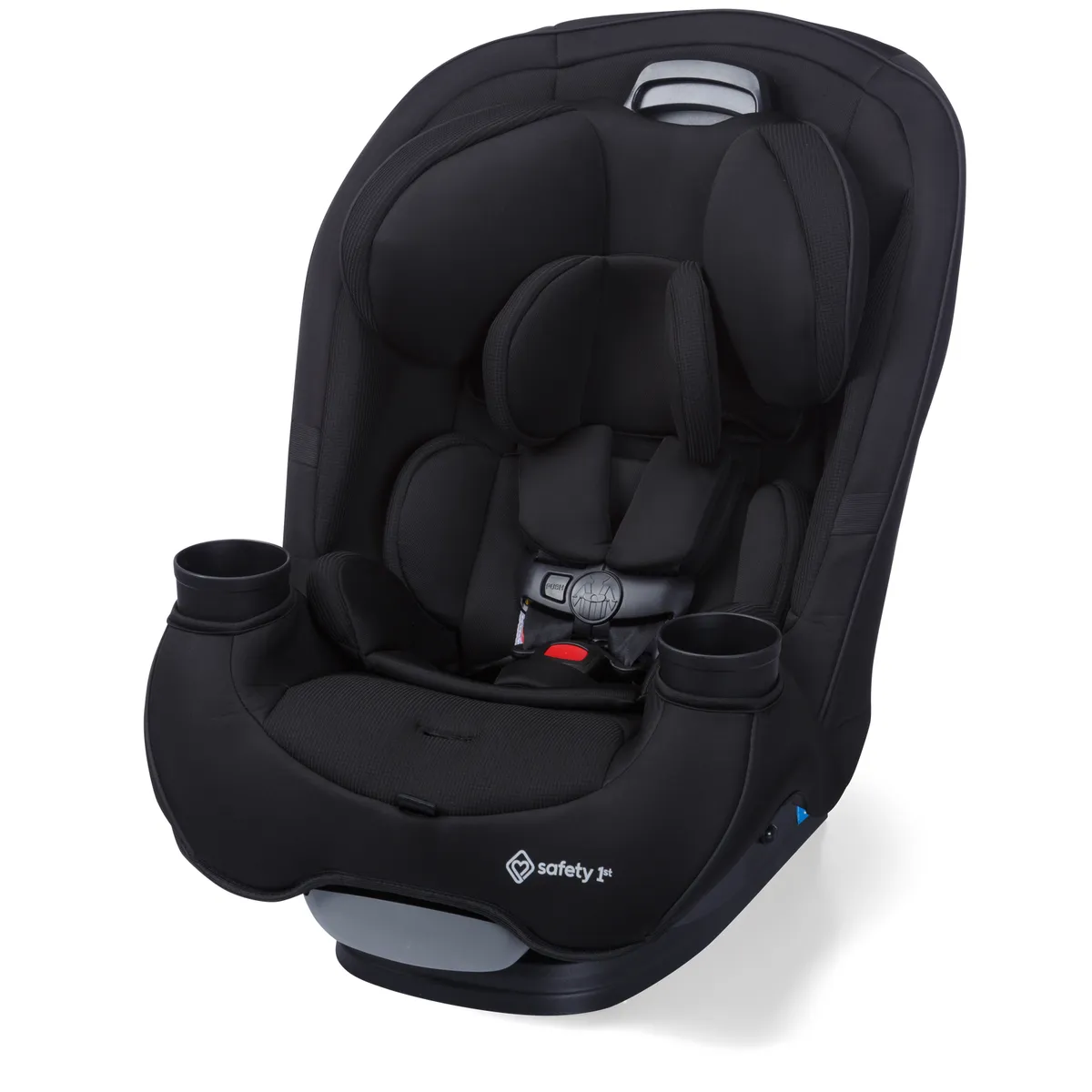
The Safety 1st Grow and Go All-in-One is still the budget all-in-one we'd point most families to: one seat from a 5 lb newborn to a 100 lb high-back booster, as long as you can live with a 40 lb rear-facing limit and a 52 in booster top.
- Rear-facing
- Forward-facing
- Booster
What we like
One seat covers 5 pounds rear-facing to a 100 pound high-back booster, in the budget price band. The lower anchors can be used for the full rear-facing range and to a 55 pound child forward-facing, and the top tether is required forward-facing whenever your vehicle has an anchor.
The QuickFit harness and headrest adjust together, the pad comes off for machine washing without unthreading the harness, and the two cup holders are removable and top-rack dishwasher safe. It's FAA-certified for aircraft with the internal harness.
Worth knowing
Rear-facing stops at 40 pounds, below 50 pound rivals, and booster mode ends at 52 in, so most children will need a dedicated booster afterward. There's no backless mode, and it isn't FAA-certified as a booster.
It's listed at about 19 in wide (retailer and CPST figures, not Safety 1st's), so it isn't a three-across seat. Newborns need a harness rethread plus the head and body pillows, and the warranty is 1 year.
❮ Back to Best Convertible and All-in-One Car Seats
Plenty of parents want exactly one car seat: safe, washable, affordable, and good from the hospital ride to the booster years. That’s the job the Safety 1st Grow and Go was built for.
You may know it as the Grow and Go 3-in-1. Safety 1st now sells it as the Grow and Go All-in-One Convertible Car Seat, model CC409, and its old CC138 product page now leads to the CC409 page. It’s the same Grow and Go line and the same three modes under a new model number, with an updated label. Every limit on this page comes from Safety 1st’s current owner’s manual (4358-8705, revision 05.12.25). If you own an older Grow and Go, the “What changed” section is for you.
Our verdict: for families on a budget who want one seat for years and drive a mid-size or larger car, the Grow and Go All-in-One is still an easy recommendation. Just know that rear-facing stops at 40 lb and the booster at 52 in.
Key features of the Safety 1st Grow and Go All-in-One
- Three modes: rear-facing harness (5–40 lb), forward-facing harness (30–65 lb) and high-back belt-positioning booster (40–100 lb)
- QuickFit harness: the harness and headrest adjust together with one handle, with no rethreading in the regular slots
- 3 recline positions with two rear-facing level lines; head and body pillows for small babies
- Two removable cup holders (top-rack dishwasher safe) and a machine-washable pad
- FAA-certified with the internal harness; 10-year useful life
- “Made in USA from American and imported parts (including seat pad),” per the manual
What changed from the Grow and Go 3-in-1
It’s the same Grow and Go All-in-One under a new model number: CC409 now, CC138 on older listings (for example, CC138DWV). Nothing we read points to a new platform, though Safety 1st hasn’t said whether the shell or foam changed. What changed is the label. Here’s the older Grow and Go 3-in-1 label (2021 manual) against the current manual.
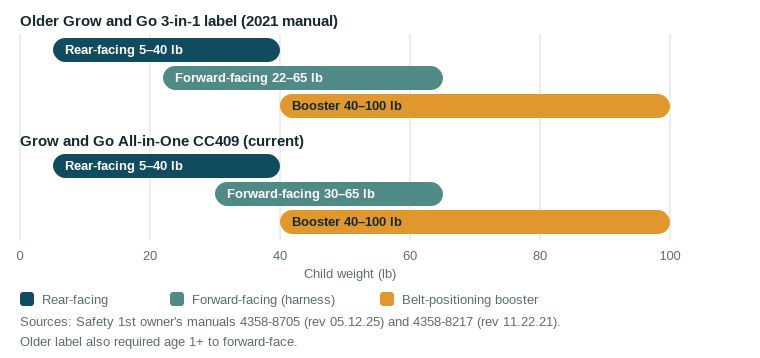
| Older Grow and Go 3-in-1 label (2021 manual) | Grow and Go All-in-One CC409 (current manual) | |
|---|---|---|
| Rear-facing | 5–40 lb, 19–40 in | 5–40 lb, 19–40 in (same) |
| Forward-facing harness | From 22 lb, 29 in and at least 1 year old, to 65 lb | From 30 lb and 34.4 in, after outgrowing rear-facing, to 65 lb |
| Booster | 40–100 lb, to 52 in | 40–100 lb, to 52 in (same) |
| Lower anchors, forward-facing | 40 lb, per older listings such as Safe in the Seat | To a 55 lb child |
| Side-impact claim | — | Safety 1st says it meets the federal side-impact standard |
| Manual | Grow and Go only | Shared with the Safety 1st EverFit |
The forward-facing minimum is now 30 lb and 34.4 in. Older labels let children turn forward at 22 lb, 29 in and age 1. The current manual says your child must have outgrown rear-facing before using forward-facing mode, and it has no age minimum. That’s the safer direction: more time rear-facing.
The forward-facing lower-anchor limit is now 55 lb. Older listings, such as Safe in the Seat, gave 40 lb. Above 55 lb, you install with the vehicle belt and top tether.
The current manual also sets out two rear-facing level lines by child size, and allows only Position 1 (fully upright) forward-facing and in booster mode. Details are below.
What stayed the same: 5–40 lb rear-facing, the 65 lb harness top, the 100 lb booster, QuickFit, the 10-year life, FAA certification in harness mode, the 1-year warranty and the qualified “Made in USA” line.
Have an older Grow and Go?
Follow the label and manual on your own seat. Keep using it until its expiration date, as long as it hasn’t been in a crash and isn’t under a recall.
Other versions: Sprint, Comfort Cool, Extend ’n Ride LX and EverFit
The Grow and Go name covers several seats, and only one has a recall. Check the model number on your seat’s side label.
Recall: Grow and Go Sprint (CC321), NHTSA 25C-006. NHTSA recall 25C-006 covers the Grow and Go Sprint, model numbers CC321GYU, CC321GYUD, CC321GYY, CC321GYYD, CC321HAO and CC321HAR, made Feb 28 – Dec 31, 2023. The headrest foam isn’t adequately secured, and a child can pick off pieces, which is a choking hazard. The free remedy is a replacement headrest pad kit. Contact Dorel at 1-877-657-9546 or [email protected], or NHTSA at 888-327-4236, and see nhtsa.gov/recalls. Other Grow and Go model numbers, including the Grow and Go All-in-One reviewed here, aren’t included.
- Grow and Go Sprint: a separate Grow and Go model. If you have one, check the recall box above.
- Grow and Go Comfort Cool: a pricier Grow and Go with a temperature-regulating fabric. Check its own label for limits.
- Grow and Go Extend ’n Ride LX: adds a pull-out leg-room panel. Check its own label for limits.
- Safety 1st EverFit All-in-One: a budget sibling that shares this seat’s owner’s manual.
What are the child size limits of the Grow and Go All-in-One?
| Mode | Weight | Height and other rules |
|---|---|---|
| Rear-facing harness | 5–40 lb | 19–40 in; top of head at least 1 in below the top of the headrest |
| Forward-facing harness | 30–65 lb | 34.4–49 in; must have outgrown rear-facing; tops of ears below the top of the headrest |
| High-back booster | 40–100 lb | 43.4–52 in; ears never above the top of the headrest; vehicle lap and shoulder belt only |
The manual says your child must stay rear-facing until they outgrow any one rear-facing limit, and must stay in the forward-facing harness until they outgrow any one harness limit.
For the smallest babies, the manual has you rethread the harness into the lower shoulder slots, put the headrest in its lowest position, and use the head and body pillows together, rear-facing only.
Pick the level line by your child’s size. Children 5–30 lb and 19–34.3 in use the bottom level line. Children 30–40 lb and 34.4–40 in who can sit up unassisted use the top line. Rear-facing uses recline Position 3 or 2, never Position 1. Our guide to recline angle indicators explains why the angle matters.
Booster mode ends at 52 in, before many children are ready for the adult belt alone, so plan on a dedicated booster afterward. Don’t use booster mode if your child’s head is less than 5 in below the vehicle roof. See when to switch to a booster for the readiness signs.
How big is the Grow and Go, and will it fit in your vehicle?
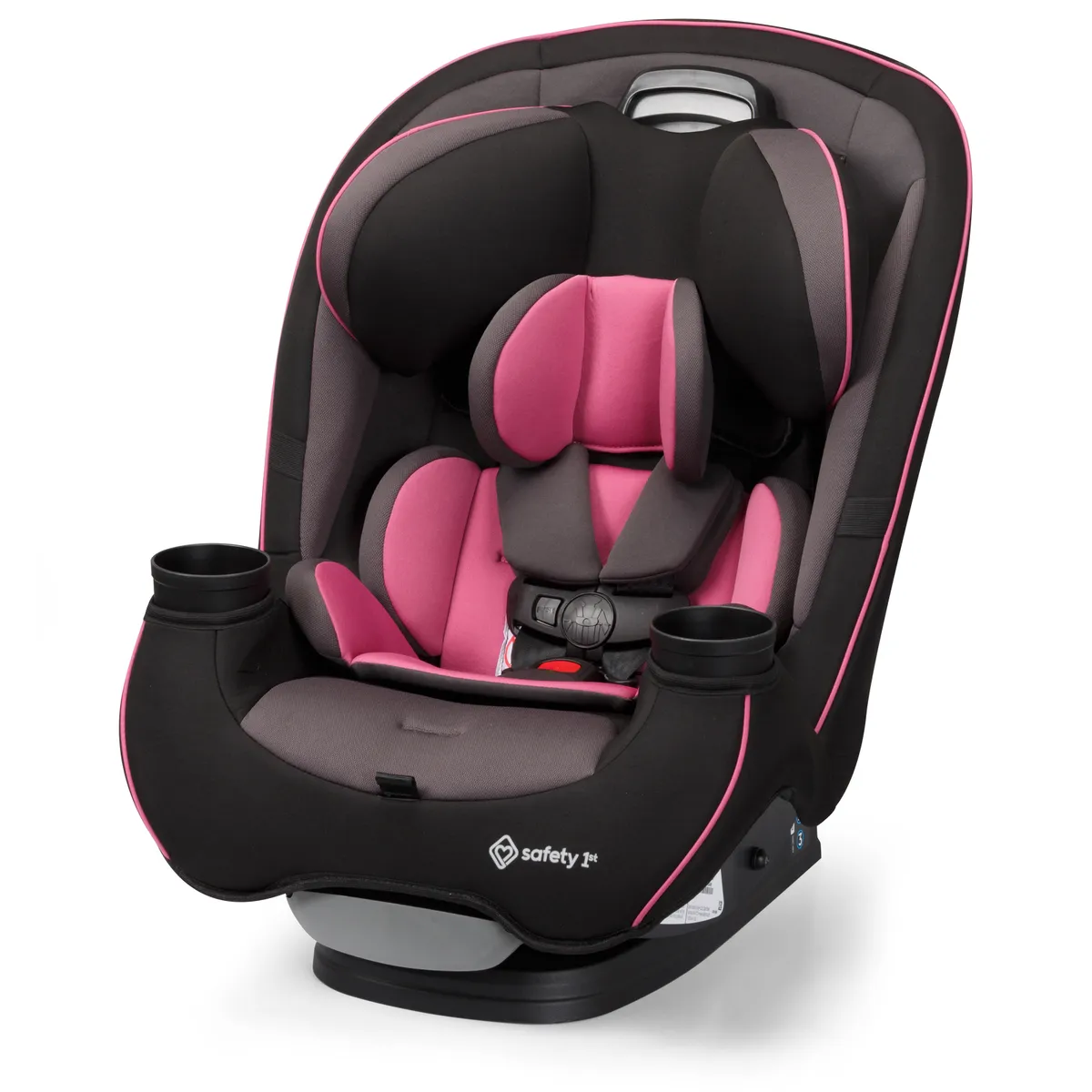
Image: Safety 1st
Safety 1st doesn’t publish dimensions in the manual. Retailer and car seat technician listings put it at about 19 inches wide and roughly 15–19 pounds, depending on the source, so treat those as approximate.
That’s light for an all-in-one, but it’s not a three-across seat in most vehicles. Rear-facing at full recline it takes real front-to-back space, and the manual wants it touching or as close as possible to the seat in front. In a compact car, measure first.
How safe is the Grow and Go?
Every US car seat must meet FMVSS 213. Safety 1st says the current Grow and Go meets the federal side-impact standard (FMVSS 213a), which applies to car seats made on or after December 5, 2026 (91 FR 57265). The owner’s manual doesn’t state it, so check the labels on the seat you buy.
Always use the top tether forward-facing in harness mode when your vehicle has an anchor; the manual calls skipping it a misuse. See our top tether guide.
Recalls: As of our check, NHTSA lists no recall for the Grow and Go All-in-One. The only Grow and Go recall is the Sprint’s (see the box above). Register your seat with Safety 1st and check nhtsa.gov/recalls with your model number.
Expiration: 10 years after the date of manufacture, printed on a label on the side of the seat. Replace it after any moderate or severe crash.
Travel: it’s FAA-certified for aircraft with the internal harness only, on a forward-facing aircraft seat, ideally by the window. It isn’t certified in booster mode because aircraft seats don’t have shoulder belts. More in our flying with a car seat guide.
How easy is the Grow and Go to install and use?
Installing:
- Rear-facing: lower anchors or vehicle belt, across the full 5–40 lb range. No tether rear-facing. Use Position 3 or 2 and the right level line. A rolled towel or pool noodle under the front of the base is allowed to reach it.
- Forward-facing: lower anchors up to a 55 lb child, then the vehicle belt plus top tether, rated to 65 lb. Position 1 only.
- Booster: your child rides in the vehicle’s lap and shoulder belt. No lower anchors in booster mode, never a lap belt alone, and keep the seat buckled in even when it’s empty. Position 1 only.
Use the lower anchors or the seat belt, never both. Set the buckle slot before you install: the manual says you can’t move it once the seat is in. The manual doesn’t describe a built-in belt lock-off. If your vehicle has an emergency locking retractor with a sliding latch plate, you need a locking clip, and Safety 1st will send one if you ask.
Expect some effort. BabyGearLab, reviewing the earlier generation, found the hook-style anchors and belt install fiddly and the harness hard to tighten evenly. Have a certified technician check your install.
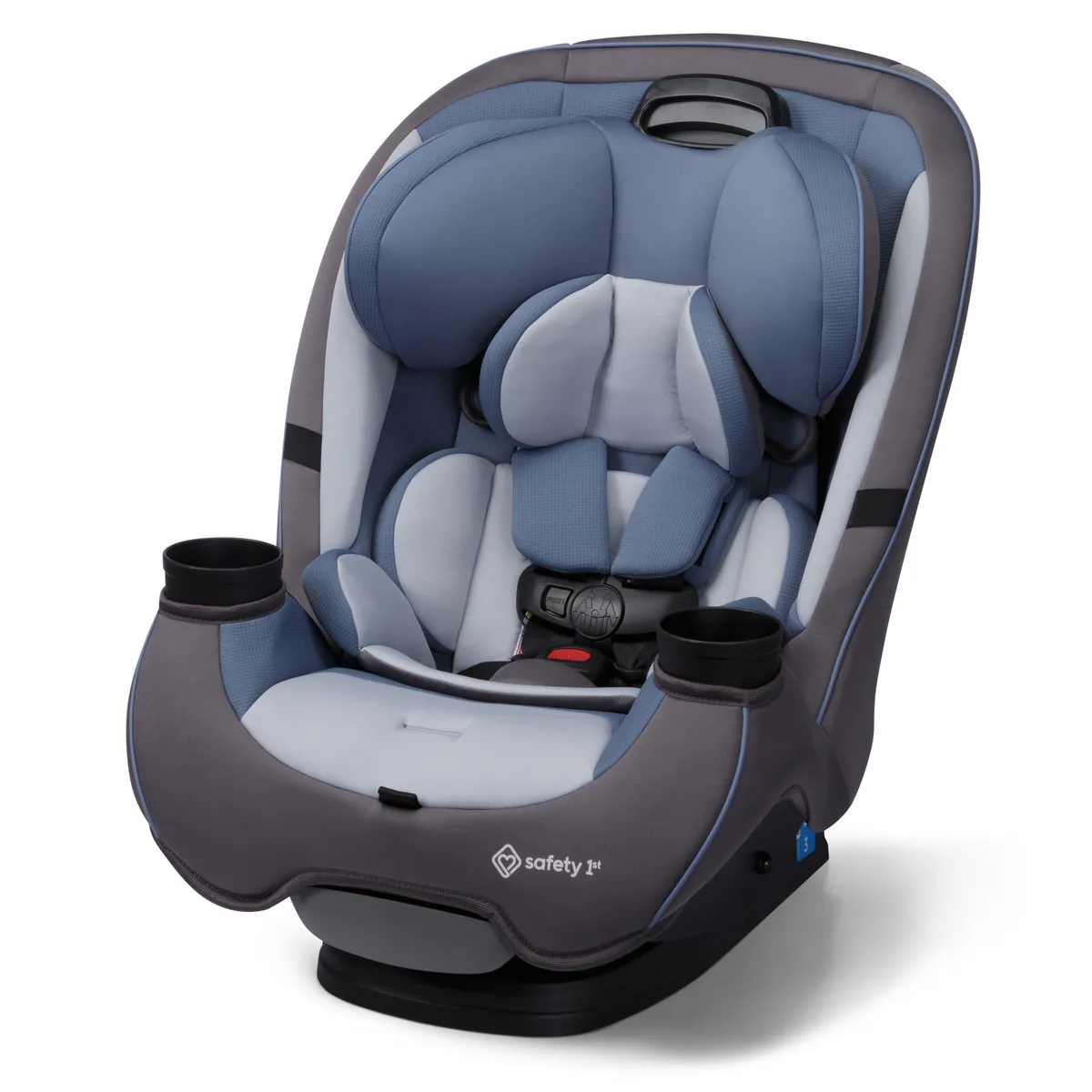
Image: Safety 1st
Everyday use: QuickFit moves the harness and headrest together, so only the newborn slots need a rethread. The pad comes off without unthreading the harness for a cold, gentle wash, and the cup holders go on the dishwasher’s top rack.
Warranty: 1 year from the original purchase. Keep your receipt.
Grow and Go vs the alternatives
Graco Extend2Fit 3-in-1: rear-faces to 50 lb with a legroom extension panel, and its booster runs taller. Choose it if extended rear-facing is your priority.
Graco 4Ever DLX 4-in-1: adds a backless booster to 120 lb and a belt lock-off, but it’s bigger, heavier and pricier. Choose it for the longest booster years.
Graco SlimFit3 LX: narrower, at about 16.7 in. Choose it if you need three across.
Maxi-Cosi Pria Max All-in-One: another Dorel seat with the same size limits, covered by a separate manual. Its forward-facing lower-anchor limit is 50 lb (55 lb here), and it sits in a higher price band.
More budget picks: our best cheap convertible car seats.
BestCarSeatHub’s Final Verdict

- Three modes, from 5 lb rear-facing to a 100 lb high-back booster
- Budget price band
- Forward-facing lower anchors to a 55 lb child
- QuickFit harness; washable pad and dishwasher-safe cup holders
- Light for an all-in-one (roughly 15–19 lb, per listings)
- 10-year useful life; FAA-certified in harness modes

- Rear-facing stops at 40 lb, below 50 lb rivals like the Extend2Fit
- Booster mode ends at 52 in, so most kids will need another booster
- Newborn setup needs a harness rethread plus the pillows
- Install and harness tightening take effort, per BabyGearLab’s testing of the earlier generation
- Not a three-across seat; big when fully reclined rear-facing
- No backless booster mode; not FAA-certified as a booster
- 1-year warranty
Who it’s for
Parents who want one affordable seat from birth through the early booster years, with a mid-size or larger car, and who don’t mind buying a dedicated booster around the grade-school years.
Who should skip it
- Parents focused on extended rear-facing. The Extend2Fit 3-in-1 goes to 50 lb.
- Families who need three seats across, or who drive a small car with tall front passengers. Look at the SlimFit3 LX.
- Parents who want the longest booster life from one seat. The 4Ever DLX runs to 120 lb as a backless booster.
For a budget all-in-one that covers 5 to 100 lb, the Grow and Go is still one of the best values we’ve researched. Use the buttons on this page to see current colorways.
- Model
- CC409 (older listings: CC138)
- Modes
- Rear-facing harness, forward-facing harness, high-back belt-positioning booster (no backless mode)
- Rear-facing
- 5–40 lb and 19–40 in; top of head at least 1 in below the top of the headrest
- Forward-facing harness
- 30–65 lb and 34.4–49 in; child must have outgrown rear-facing first; tops of ears below the top of the headrest
- High-back booster
- 40–100 lb and 43.4–52 in; vehicle lap and shoulder belt only; ears never above the top of the headrest
- Lower anchor (LATCH) limit
- Full rear-facing range (to 40 lb); forward-facing to a 55 lb child, then vehicle belt plus top tether to 65 lb; not used in booster mode
- Top tether
- Required forward-facing in harness mode whenever the vehicle has a tether anchor; never used rear-facing
- Recline
- 3 positions: 3 or 2 rear-facing (never 1), with two level lines; Position 1 only forward-facing and in booster mode
- Cup holders
- 2, removable, top-rack dishwasher safe
- Useful life
- 10 years from date of manufacture
- FAA
- Certified for aircraft with the internal harness only, not in booster mode
- Warranty
- 1 year from original purchase (receipt required)
- Made in
- USA from American and imported parts (including seat pad)
- Width and weight
- About 19 in wide and roughly 15–19 lb, per retailer and CPST listings (not in the manual)
- Owner's manual
- 4358-8705, revision 05.12.25 (shared with the Safety 1st EverFit All-in-One)