booster seat
KidsEmbrace 2-in-1 Harness Booster Review
by kidsembrace
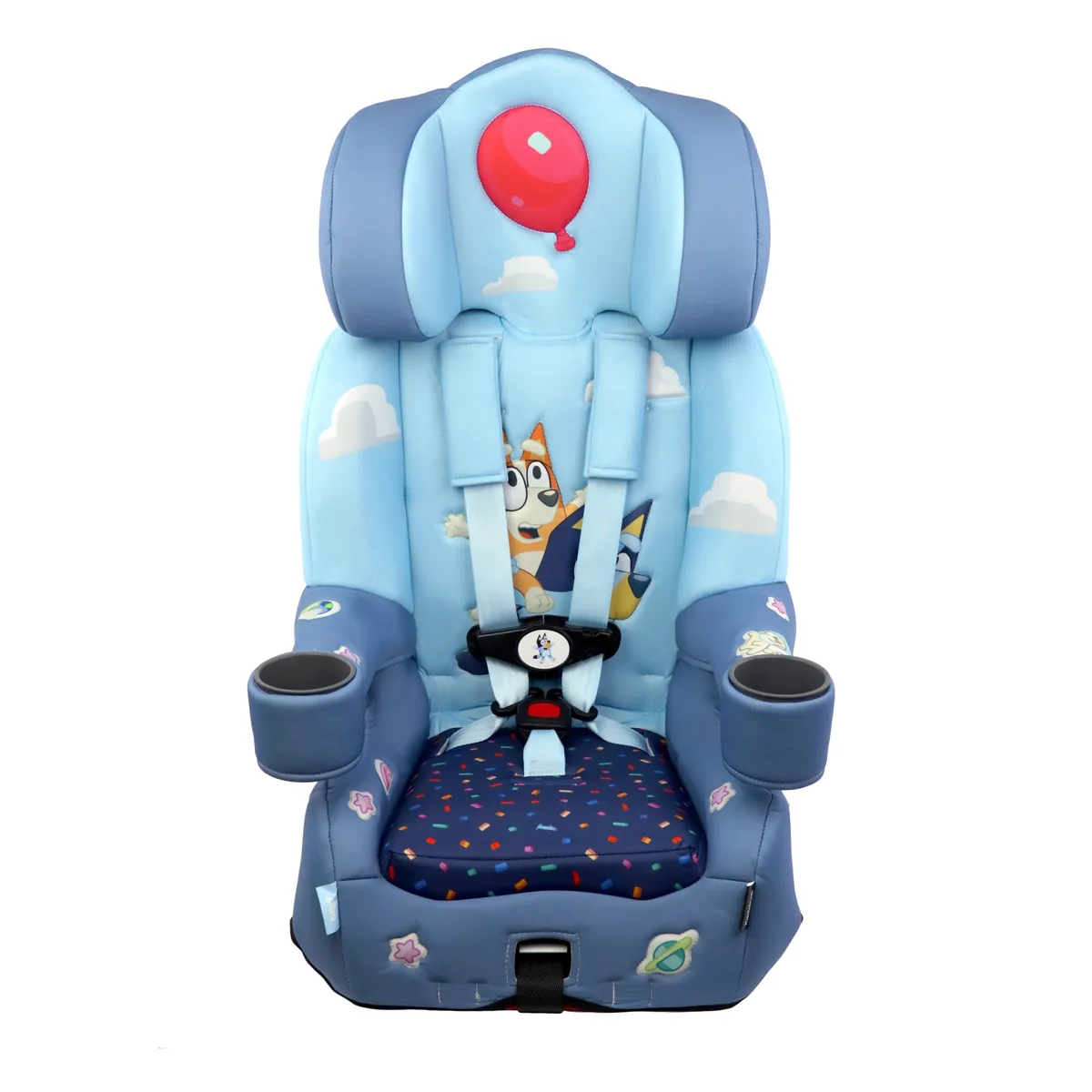
The KidsEmbrace 2-in-1 is a real 65 lb harness seat that becomes a highback booster to 100 lb, and kids love the Bluey and Paw Patrol designs, but it's bulky, fiddly to install, lasts 7 years and has no backless mode, so you're paying for the character more than the features.
- Forward-facing
- Booster
What we like
Kids who resist buckling up often love the Bluey and Paw Patrol designs. The harness goes to 65 pounds, and the seat then becomes a highback booster to 100 pounds.
The lower anchors (LATCH) are rated to 50 pounds child weight in harness mode, it's certified for aircraft in harness mode, the crotch buckle has 2 positions, and the seat pad is machine washable. Two big cup holders are built into the armrests.
Worth knowing
It's about 19 inches wide with fixed cup holders (per KidsEmbrace's Target listing), so it rarely fits three across. CPST reviewers of an earlier version found the belt path hard to reach and the tether tail short, and the harness must be rethreaded to change height.
There's no backless mode, the useful life is 7 years, and the list price sits in the premium band for an average feature set. KidsEmbrace says its seats are side-impact tested, but there's no independent crash rating for this seat.
❮ Return to Booster Seat Reviews
If your preschooler fights every buckle, Bluey or Chase might end the standoff. The KidsEmbrace 2-in-1 Harness Booster is a forward-facing 5-point harness seat that later becomes a highback belt-positioning booster, dressed in Bluey or Paw Patrol (Chase, Marshall or Skye) designs. It has no rear-facing mode and no backless mode.
This review covers KidsEmbrace’s 5-point-harness 2-in-1 (harness to highback booster). It is not the harness-free KidsEmbrace 2-in-1 belt-positioning booster (highback to backless) that some other reviewers cover.
Our verdict: a legitimate 65 lb harness seat with a big kid-appeal factor, but the character is what you’re paying extra for. It’s bulky, the install takes patience, and it lasts 7 years. Every limit on this page comes from KidsEmbrace’s current owner’s manual (doc 14099.6) and its official product pages. We compared sources; we didn’t test this seat hands-on.
What changed from the KidsEmbrace 2-in-1 we reviewed before
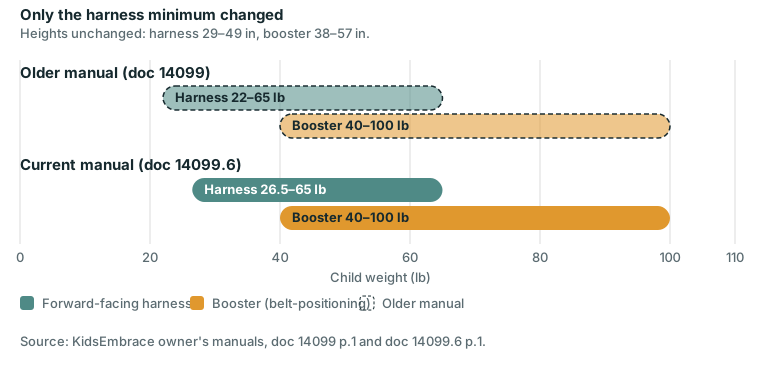
KidsEmbrace has revised this seat. The seat sold today has different limits from the one we first reviewed, and older seats are still in circulation:
- Harness minimum: 22 lb → 26.5 lb. The harness maximum (65 lb) and the height ranges are unchanged.
- Lower anchors in harness mode: 45 lb → 50 lb child weight.
- Age minimums dropped. The older manual (doc 14099) required at least 1 year for the harness and 4 years for the booster. The current manual sets limits by height and weight only.
- Useful life is now stated as 7 years after the manufacture date. The older manual said only not to use the seat after the date on the bottom.
- New designs: Bluey and Paw Patrol. The Marvel, DC, Disney and TMNT versions we covered before are no longer on KidsEmbrace’s own store.
- Booster limits did not change: 40–100 lb and 38–57 in, in both manuals.
As context, 26.5 lb (12 kg) is the federal minimum weight for forward-facing seats. KidsEmbrace hasn’t said whether that’s why it raised the harness minimum.
Two sets of limits in circulation: check your label
Older seats are labeled for a 22 lb harness minimum and a 45 lb lower-anchor limit, and KidsEmbrace’s product pages still link the older manual even though their spec text gives the new limits. Follow the label on your own seat and the manual that came with it. If you’re buying new, a child under 26.5 lb belongs rear-facing. KidsEmbrace itself says to keep kids rear-facing as long as possible, and it doesn’t make a rear-facing seat (see why rear-facing longer matters).
Corrections to our earlier review
We’ve fixed or removed:
- a 30 lb booster minimum (both manuals say 40 lb) and a 110 lb booster maximum in our data (it’s 100 lb)
- a “3 years old” booster age (the older manual said 4; the current one gives no age)
- an IIHS “Best Bet” claim. IIHS ran booster evaluations from 2008 to 2024 and no longer issues them; it never rated harness mode.
- an “8-year expiration” we couldn’t source. For an older seat, follow the date on the bottom of your seat.
- our LATCH note, which now reflects the 50 lb limit
What are the child size limits?
| Mode | Weight | Height | Fit rules |
|---|---|---|---|
| Forward-facing 5-point harness | 26.5–65 lb | 29–49 in | Sits upright unassisted; shoulders below the top harness slots |
| Highback booster | 40–100 lb | 38–57 in | Tops of ears below the top of the headrest; lap-and-shoulder belt only |
Leave the harness when your child is over 65 lb, over 49 in, or their shoulders are above the top harness slots, whichever comes first.
The ears rule applies in both modes: stop using the seat when the tops of your child’s ears are above the top of the headrest. In booster mode, the manual says this protects against whiplash.
Is your child ready for booster mode?
The manual’s booster minimum is 40 lb and 38 in, but meeting the minimum isn’t the same as being ready. KidsEmbrace recommends using the harness to its maximum weight and height first.
That matches AAP and CPST advice: keep a child harnessed until they outgrow the harness, and move to a booster only when they can sit properly for the whole ride, which for most kids is around age 5 or later. More on timing: when it’s time to switch to a booster.
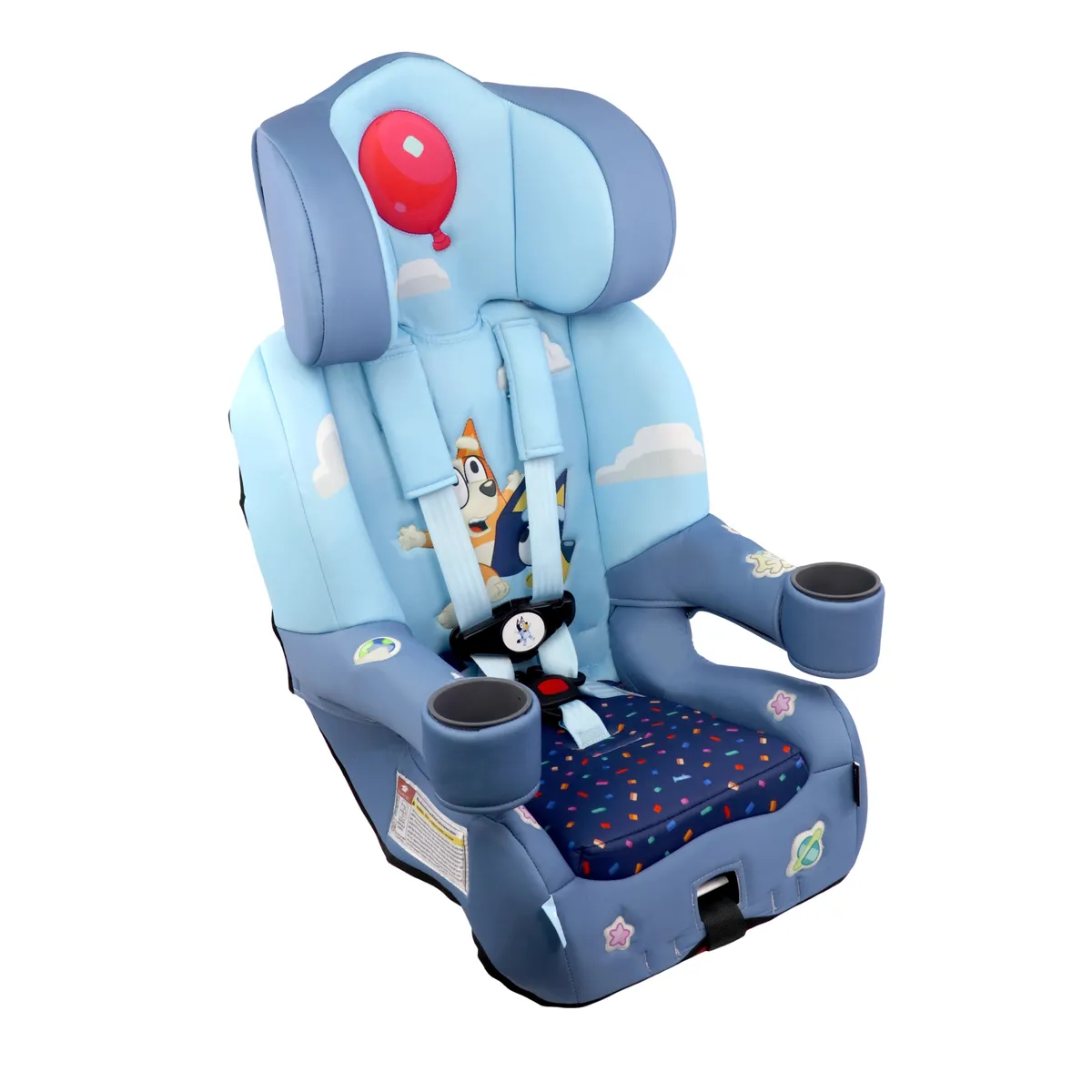
Image: KidsEmbrace
How big is it, and will it fit in your vehicle?
It’s a wide seat. KidsEmbrace’s Target listing gives 32.5 in H x 19 in W x 19.5 in D and lists the seat at 16 lb. Much of that width is the armrests and fixed cup holders.
That makes it fine for one outboard seat, but not a three-across seat in most cars. If you need three, see our three-across guide.
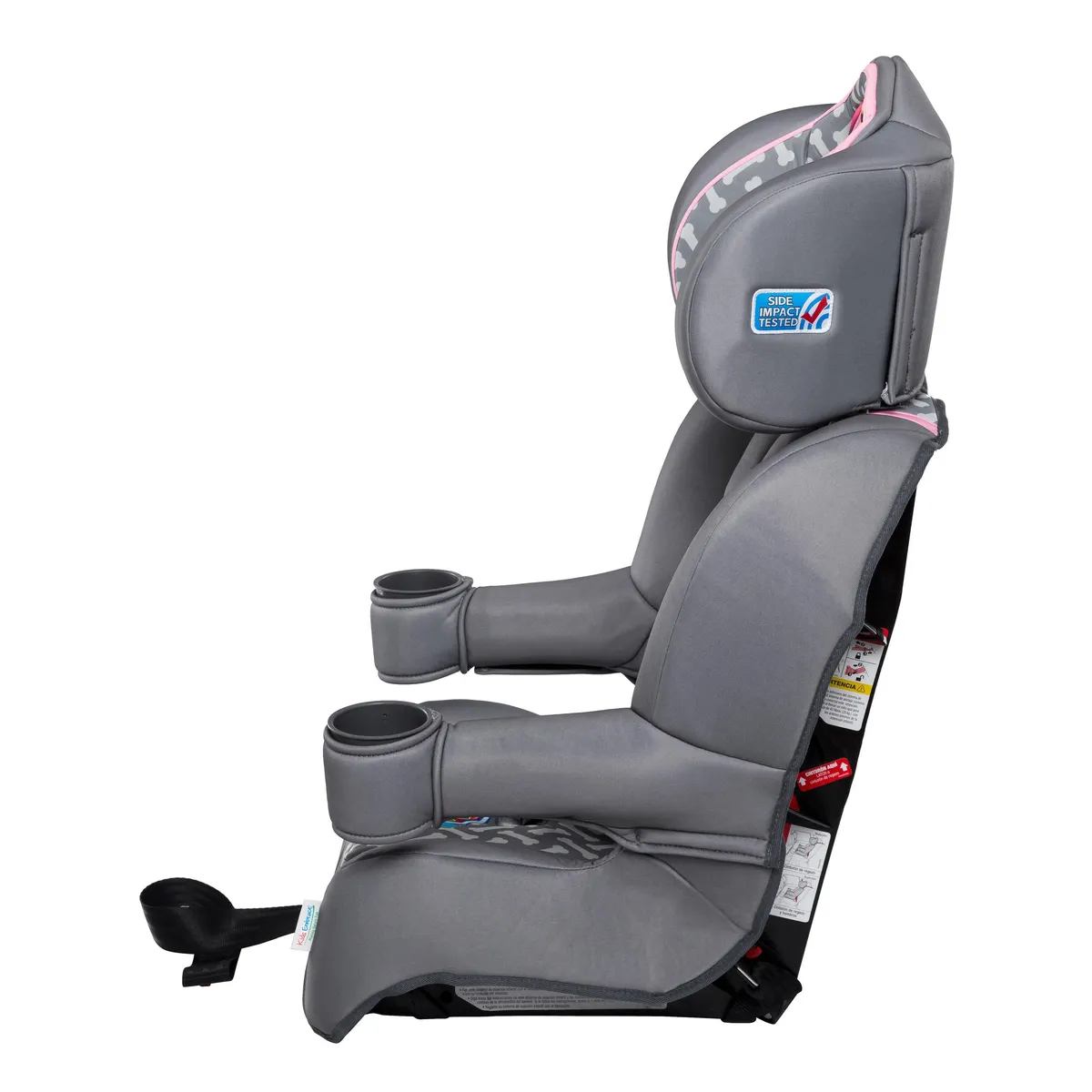
Image: KidsEmbrace
How safe is the KidsEmbrace 2-in-1?
The manual says the seat “meets or exceeds all applicable requirements” of FMVSS 213, the federal crash standard. It’s certified to FMVSS 213, like every car seat legally sold in the US.
KidsEmbrace says its combination seats are side-impact tested, which US rules didn’t require. KidsEmbrace also says its harness uses patented energy-absorbing technology (the manual calls these Energy Absorbing Harness Pads). Neither claim comes with published test details, so treat them as the maker’s claims.
FMVSS 213a, the federal side-impact standard, applies to seats made on or after December 5, 2026. KidsEmbrace’s manual cites FMVSS 213 only, and the company hasn’t said whether current production is certified to 213a. Check the label for the standard your seat was certified to.
There’s no independent crash rating for this seat. The honest summary: it’s a certified seat, not one with better-than-average safety data. Correct use matters most: a snug harness, the chest clip at armpit level, and the tether whenever you can.
Recalls: what you need to know
As of our check on November 18, 2026, NHTSA lists no recalls or investigations for KidsEmbrace seats. Transport Canada issued two actions in 2016 on older, Canadian-market KidsEmbrace seats; they don’t apply to US seats. Register your seat with KidsEmbrace so you hear about any future recall, and see our car seat recalls page.
How easy is it to install and use?
Harness mode: install with the lower anchors (LATCH) or the vehicle seat belt, never both. Lower anchors are rated to 50 lb child weight; once your child is over 50 lb, reinstall with the vehicle seat belt. Always use the top tether if a tether anchor is available.
Booster mode: your vehicle’s lap-and-shoulder belt holds your child. Never use it with a lap-only belt. The lap belt goes under both armrests and the shoulder belt through the headrest guide, adjusted so it sits centered on your child’s shoulder. The manual says to secure the top anchorage strap, and you may clip on the lower anchors to keep the seat stable and make climbing in easier. When the seat is empty, keep it buckled in.
Expect a fiddly install. CPST reviewers of an earlier version found the belt path hard to reach, the tether tail short and hard to tighten, and the lower-anchor routing unintuitive. Plan on a car seat technician check.
Everyday use: changing harness height means rethreading the straps, and the strap covers can hide a twist, so check the straps each time. The crotch buckle has 2 positions. Changing the recline means taking the seat out of the car. There’s storage for the manual on the seat, but nowhere on the seat to keep harness parts once you convert to booster.
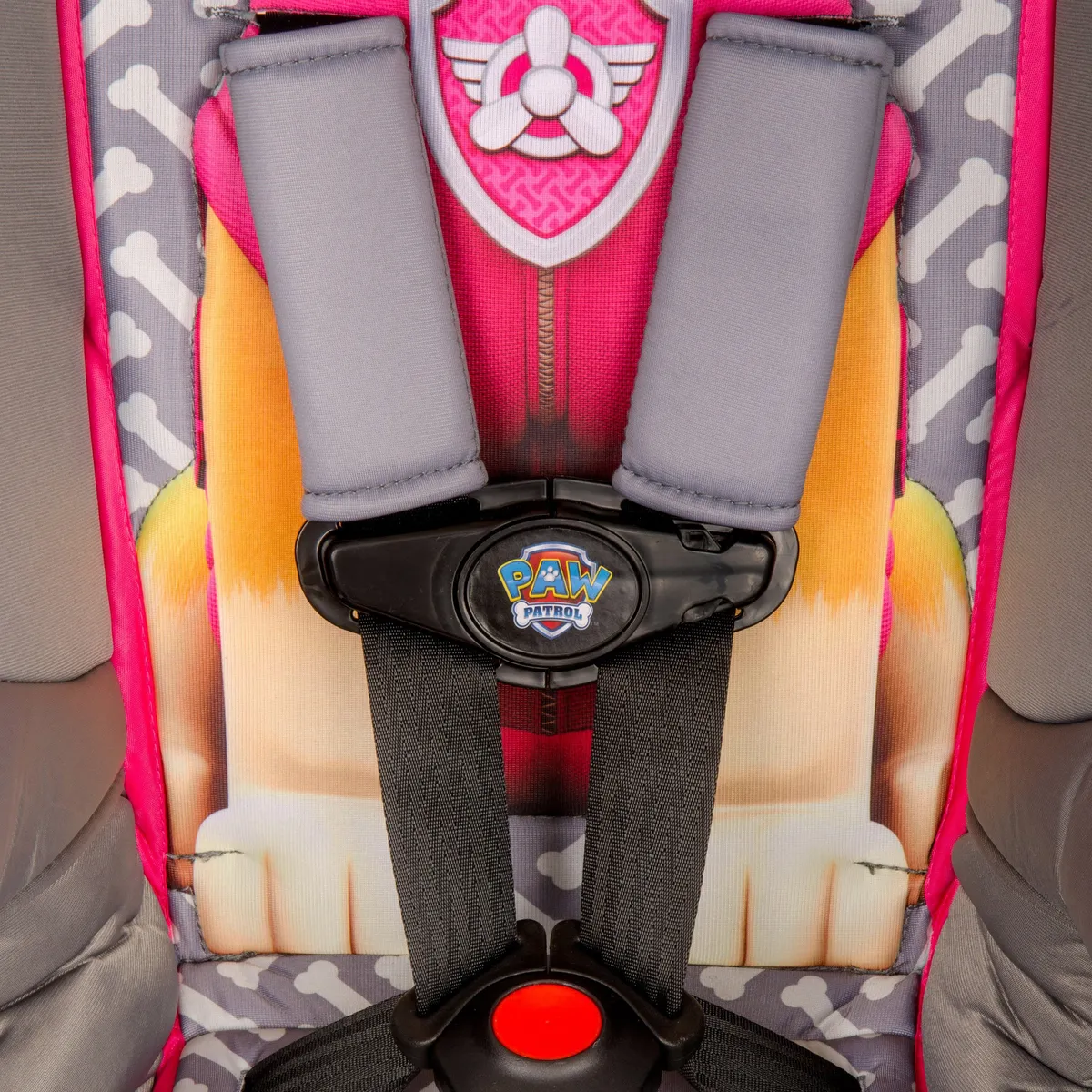
Image: KidsEmbrace
Taking it on a plane
It’s certified for aircraft in harness mode only. On the plane, it goes in a forward-facing seat and installs with the aircraft lap belt; no tether is needed. Booster mode isn’t certified, because planes don’t have shoulder belts. See our guide to flying with a car seat.
Cleaning and lifespan
The seat pad is machine washable on its own, cold and delicate, no bleach, drip dry. The headrest pad is surface clean only, per the manual, even though some product pages suggest otherwise.
Useful life: 7 years after the manufacture date on the bottom of the seat. That’s shorter than many rivals, so check the date on any hand-me-down. The warranty is a limited 1 year from the original purchase.
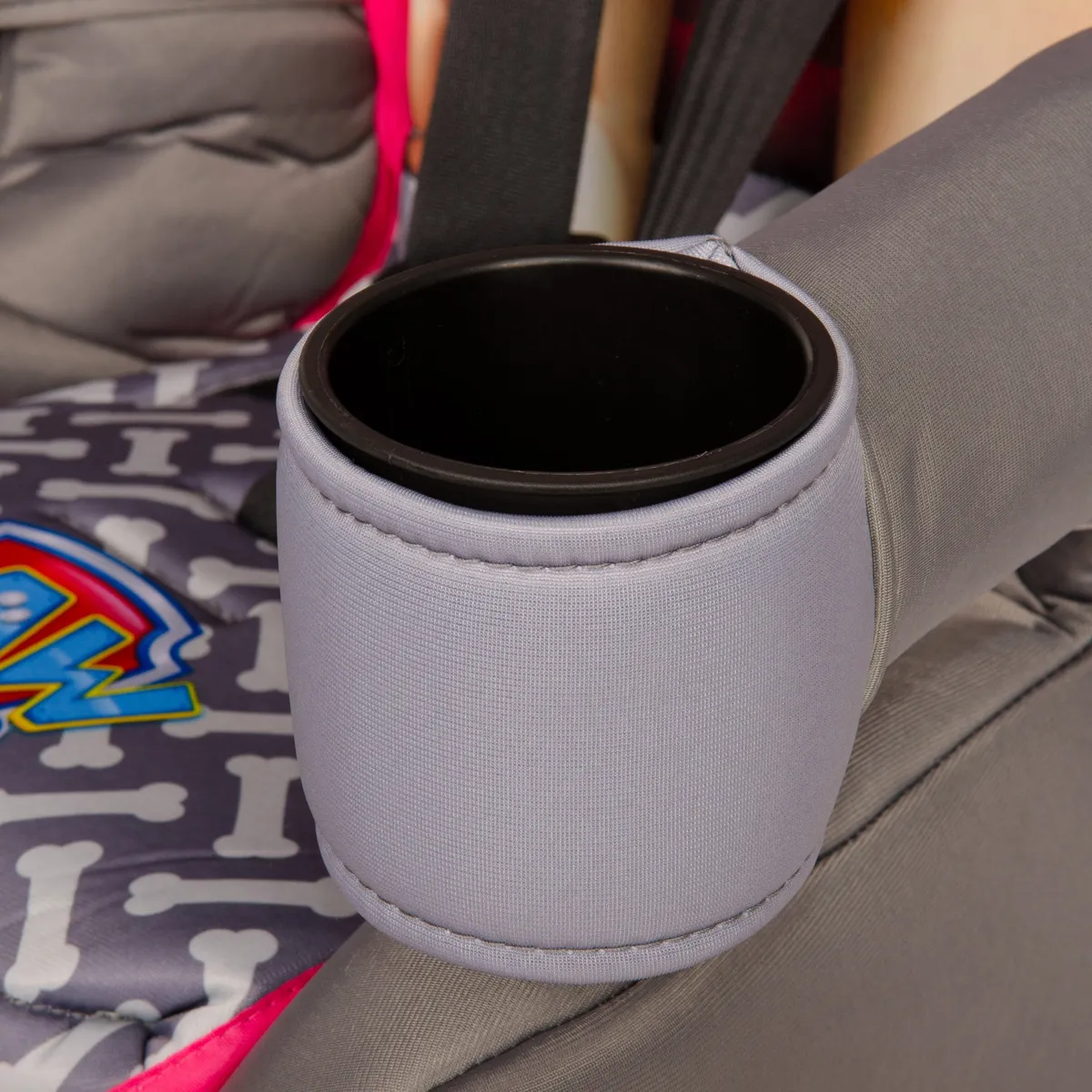
Image: KidsEmbrace
KidsEmbrace 2-in-1 vs the alternatives
Graco Tranzitions 3-in-1: the “more seat for less” pick. It’s a harness booster in the average price band that adds a backless booster mode.
Evenflo Maestro Sport: lighter and budget-priced for travel, but its harness stops at 50 lb.
Chicco MyFit: a premium harness booster in the same price band as the KidsEmbrace’s list price.
BestCarSeatHub’s Final Verdict

- Bluey and Paw Patrol designs kids actually want to sit in
- Harness to 65 lb, then booster to 100 lb
- Lower anchors usable to 50 lb in harness mode
- Aircraft-certified in harness mode
- Machine-washable seat pad and big cup holders

- About 19 in wide with fixed cup holders, so rarely a three-across seat
- Install can be fiddly (hard-to-reach belt path and short tether tail, per CPST reviewers)
- Harness must be rethreaded to change height
- No backless mode
- 7-year useful life
- Premium list price for an average feature set
- Older 22 lb seats and manuals still in circulation can cause confusion
Who it’s for
Families with a character-loving preschooler who resists the car seat, and who want one seat from forward-facing harness through the highback booster years.
Who should skip it
- Parents of kids under 26.5 lb. Keep them rear-facing in a different seat.
- Three-across families or anyone with a small back seat.
- Value shoppers. Similar limits plus a backless mode cost less elsewhere.
- Anyone wanting a backless booster for the later years, or a seat that lasts past 7 years.
If the character is what gets your child buckled in without a fight, the KidsEmbrace 2-in-1 is a reasonable choice. Use the buttons on this page to see current designs, check the label on any seat you buy, and have your install checked by a certified car seat technician.
FAQ
Is the minimum 22 lb or 26.5 lb? Current seats: 26.5 lb. Older seats are labeled 22 lb. Follow the label and manual of the seat you own.
When do I switch from LATCH to the seat belt? In harness mode, once your child weighs more than 50 lb (45 lb on older seats; check your label). Keep using the tether.
When does it expire? Current seats: 7 years after the manufacture date on the bottom. For older seats, follow the date on the bottom of your seat.
Is it FAA-approved? In harness mode only. Booster mode isn’t certified for aircraft.
Is it an IIHS Best Bet? No current rating exists. IIHS ran booster evaluations from 2008 to 2024 and no longer issues them; it never rated harness mode.
- Modes
- Forward-facing 5-point harness, then highback belt-positioning booster (no rear-facing, no backless mode)
- Forward-facing harness
- 26.5–65 lb, 29–49 in; child sits upright unassisted; shoulders below the top harness slots
- Booster
- 40–100 lb, 38–57 in; tops of ears below the top of the headrest; vehicle lap-and-shoulder belt only
- Move to booster mode
- Over 65 lb, over 49 in, or shoulders above the top harness slots
- Stop using the seat
- When the tops of your child's ears are above the top of the headrest (both modes)
- Lower anchors (LATCH)
- To 50 lb child weight in harness mode; above that, install with the vehicle belt
- Top tether
- Always, in harness mode, when a tether anchor is available
- Crotch buckle
- 2 positions
- FAA
- Certified for aircraft in harness mode only
- Size
- 32.5 in H x 19 in W x 19.5 in D (KidsEmbrace's Target listing)
- Seat weight
- Listed at 16 lb (KidsEmbrace's Target listing)
- Useful life
- 7 years after the manufacture date on the bottom of the seat
- Warranty
- Limited 1 year
- Owner's manual
- Doc 14099.6