convertible seat
Peg Perego Primo Viaggio Convertible Kinetic Review
by peg-perego
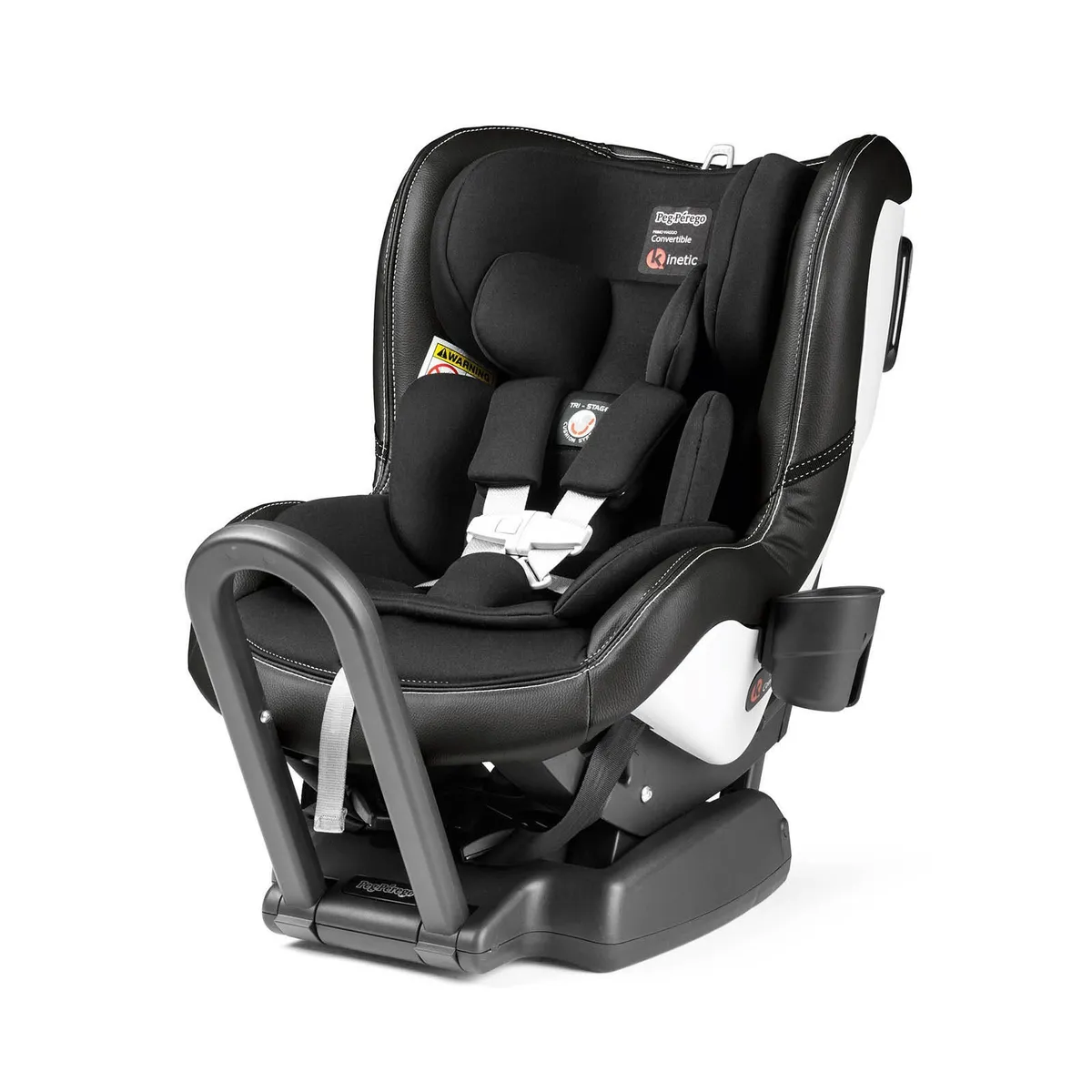
The Primo Viaggio Convertible Kinetic is a solidly built Italian convertible that adds Kinetic Pods and a rear-facing anti-rebound bar to Peg Perego's standard Convertible, but it tops out at 45 lb rear-facing, its seat-belt install takes work, and Peg Perego's manual doesn't declare the newer FMVSS 213a side-impact standard.
- Rear-facing
- Forward-facing
What we like
The anti-rebound bar (rear-facing only, with a legroom spacer) and the Kinetic Pods are extras the standard Convertible doesn't list. Forward-facing starts at 26.5 pounds, up from 22 on the standard Convertible, which keeps children rear-facing longer.
It has a 10-position headrest with a no-rethread harness, EPS/EPP foam and a steel back plate, an infant cushion, lock-off clips and an included cup holder. The fabrics are flame-retardant free, and it's made in Italy.
Worth knowing
Peg Perego's owner's manual certifies it to FMVSS 213 and doesn't declare the newer side-impact standard, FMVSS 213a, which applies to seats made on or after December 5, 2026. Check the label on the seat you buy.
Rear-facing tops out at 45 pounds, below some rivals. At 24.4 pounds it's heavy, and testers found the standard Convertible's seat-belt install hard; the lock-off clips don't replace a locked belt. Safe in the Seat notes the lowest harness position may be too high for some newborns.
❮ Back to Top-performing Child Car Seats
Peg Perego builds its car seats in Italy, and it has a loyal following among parents who want a premium convertible that feels as carefully made as a good stroller. This page used to review the standard Primo Viaggio Convertible. It now covers the Primo Viaggio Convertible Kinetic, the step-up version Peg Perego sells alongside it.
The Kinetic isn’t a brand-new seat. It’s the same Primo Viaggio convertible family with two safety additions: Kinetic Pods, Peg Perego’s add-on side-impact feature, and an anti-rebound bar for rear-facing. It rear-faces from 5 to 45 lb and forward-faces to 65 lb. Every limit on this page comes from Peg Perego’s current US owner’s manual, FIUS2402I264.
Our verdict: a well-made, Italian-built convertible with real extras for rear-facing, but it’s heavy, the belt install takes patience, and you should check the side-impact certification on the seat you buy.
Key features of the Peg Perego Primo Viaggio Convertible Kinetic
- Rear-facing from 5 to 45 lb (47 in), forward-facing from 26.5 to 65 lb (49 in)
- Kinetic Pods: Peg Perego says they “offer additional side impact protection” and help move crash forces away from your child
- Anti-rebound bar with a spacer, for rear-facing only
- 10-position headrest with a no-rethread harness
- EPS/EPP energy-absorbing foam and a steel back plate
- Infant cushion for small babies (rear-facing only)
- Cup holder included
- Lock-off clips, LATCH and a top tether
- Certified for aircraft
- 10-year useful life, flame-retardant-free fabrics, made in Italy
What changed from the Peg Perego Primo Viaggio Convertible
The Kinetic and the standard Convertible share the same product reference in Peg Perego’s declarations, the same shell dimensions and the same rear-facing limits. Here’s what’s different, according to the two owner’s manuals and Peg Perego’s product pages.
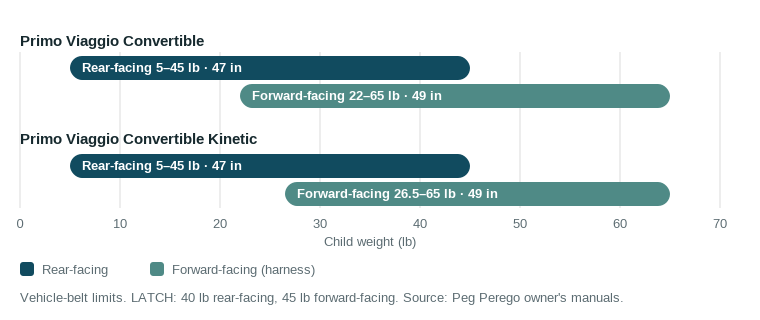
| Primo Viaggio Convertible | Primo Viaggio Convertible Kinetic | |
|---|---|---|
| Rear-facing | 5–45 lb (LATCH 5–40), 47 in | Same |
| Forward-facing | 22–65 lb (LATCH 22–45), 49 in | 26.5–65 lb (LATCH 26.5–45), 49 in |
| Kinetic Pods | No | Yes |
| Anti-rebound bar | Not shown in its 2021 manual | Yes, rear-facing only, with spacer |
| Cup holder | Not listed as included | Included |
| Seat weight | 21.6 lb | 24.4 lb (+2.8 lb) |
| Dimensions | 26.25 x 18.75 x 25.75 in | Same |
| Headrest and harness | 10 positions, no-rethread | Same |
| Federal standard in manual | FMVSS 213 | FMVSS 213 |
| Useful life | 10 years | 10 years from purchase |
The biggest change for parents is the extra rebound and side-impact hardware. Peg Perego says the anti-rebound bar increases the seat’s stability and protects your child in a rear collision or in the rebound after a frontal crash.
Forward-facing now starts at 26.5 lb, up from 22 lb. That’s a stricter rule, and a good one, because it keeps children rear-facing longer.
It’s 2.8 lb heavier. At 24.4 lb, it’s a seat to install once and leave.
Still shopping for the standard Convertible?
Peg Perego still sells it. It has the same rear-facing limits and the same size, it’s lighter and it costs less. It doesn’t have Kinetic Pods, and its 2021 manual shows no anti-rebound bar. Its manual allows forward-facing from 22 lb, but keep your child rear-facing to the seat’s limit whichever version you have. If you already own one, Peg Perego’s current policy is a 10-year life from the date of purchase.
Why some listings say 22 lb and others 26.5 lb
Some retailer listings for the Kinetic still say forward-facing from 22 lb. That figure matches the standard Convertible’s manual. The current Kinetic manual says: never use it forward-facing “if baby weighs less than 26.5 lbs (12 kg).” Follow the label and manual that came with your seat.
Which Primo Viaggio? Convertible vs Kinetic vs All in One
| Convertible | Convertible Kinetic | All in One | |
|---|---|---|---|
| Modes | Rear- and forward-facing harness | Rear- and forward-facing harness | Adds a booster mode |
| Rear-facing | 5–45 lb | 5–45 lb | 5–50 lb |
| Forward-facing harness | 22–65 lb | 26.5–65 lb | 26.5–65 lb |
| Kinetic Pods | No | Yes | No |
| Price (within the line) | Lowest | Middle | Highest |
Choose the Kinetic for the pods and the anti-rebound bar. Choose the All in One if you want one seat that continues as a booster.
What are the child size limits of the Primo Viaggio Convertible Kinetic?
| Mode | Weight (vehicle belt) | Weight (LATCH) | Height and fit rules |
|---|---|---|---|
| Rear-facing | 5–45 lb | 5–40 lb | 47 in or less; head at least 1 in below the headrest edge |
| Forward-facing harness | 26.5–65 lb | 26.5–45 lb | 49 in or less; head no more than 1 in above the headrest edge |
- Harness: the headrest has 10 positions. The lower 7 are for rear-facing; positions 8, 9 and 10 are forward-facing only.
- Infant cushion: rear-facing only. Remove it when you turn the seat forward-facing.
- Top tether: for child weights up to 65 lb.
- The manual cites the AAP: keep your child rear-facing until at least age 2, or to the seat’s rear-facing limit.
Can you use it from birth? Yes, from 5 lb with the infant cushion. But Safe in the Seat notes that the lowest harness height may be too high for some newborns, so starting in an infant seat is a reasonable plan. Read more on why rear-facing height and weight limits matter.
How big is it, and will it fit in your vehicle?
Peg Perego lists it at 26.25 x 18.75 x 25.75 in (about 18.75 in wide) and 24.4 lb. That’s a full-size convertible. It isn’t one we’d pick for a three-across setup, and it’s heavy to move between cars. Measure your back row, and check rear-facing front-to-back room, before you buy.
How safe is the Primo Viaggio Convertible Kinetic?
Peg Perego builds it with EPS/EPP foam, a steel back plate, 10-position adjustable side-impact protection and the Kinetic Pods. The manual says it “meets or exceeds all applicable Federal Motor Vehicle Safety Standard 213 requirements.”
Side-impact standard: Peg Perego’s current US owner’s manual for the Convertible Kinetic certifies it to FMVSS 213. It does not declare compliance with FMVSS 213a, the federal side-impact standard that applies to car seats manufactured on or after December 5, 2026 (NHTSA final rule, 91 FR 57265, Sep 9, 2026). The Kinetic Pods are Peg Perego’s own side-impact feature, not a certification to that standard. Seats made before that date could be legally sold and used under FMVSS 213. If 213a matters to you, check the certification label and manual on the seat you buy, or ask Peg Perego.
For context, Peg Perego’s newer infant-seat manuals do list 213a in their declarations, so the brand names the standard when it certifies to it.
Rebound protection: the anti-rebound bar is optional, but Peg Perego says using it increases stability and protects your child in a rear collision or a rebound after a frontal crash. It’s a rear-facing feature only.
Crash testing: we haven’t crash-tested this seat. BabyGearLab tested the standard Convertible, which shares this shell and install system, and rated its crash results as average.
Recalls: Peg Perego lists no recalls for either convertible, and we found no NHTSA recall for them. Older Primo Viaggio infant-seat campaigns don’t involve these seats. Register your seat, and check nhtsa.gov/recalls and our car seat recalls page.
How easy is it to install and use?
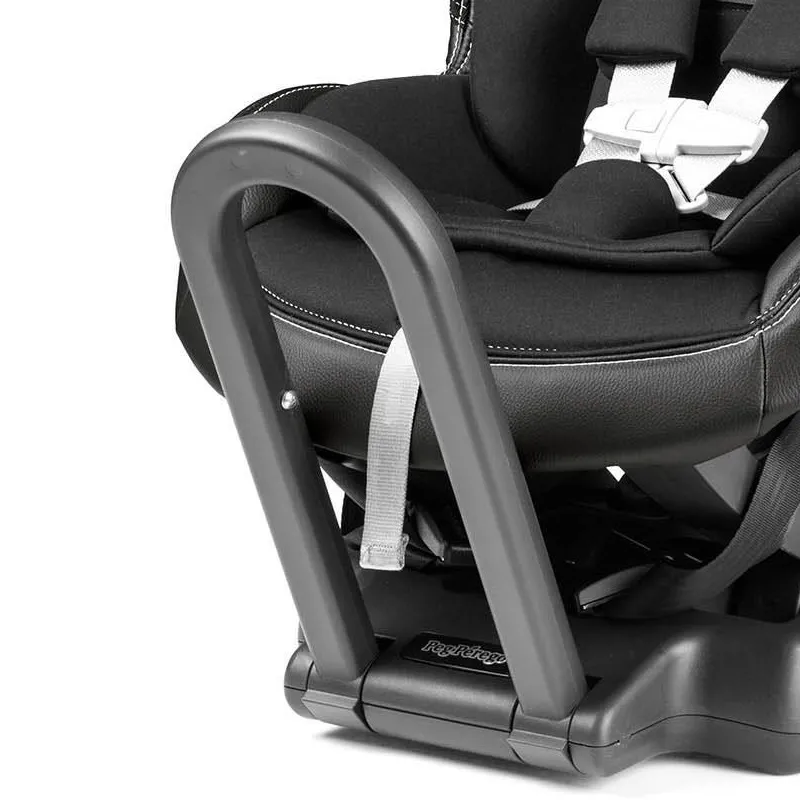
Image: Peg Perego
You can install it with LATCH or the vehicle seat belt, in either direction.
- LATCH: up to 40 lb rear-facing and 45 lb forward-facing. Above that, switch to a seat-belt install.
- Lock-off clips: they add stability, but the manual says they don’t replace a locked seat belt. Lock the vehicle belt, or use a locking clip if your belt doesn’t lock.
- Recline: a handle under the front edge. Rear-facing, the backrest sits 35°–45° from vertical, with a level line on the seat. A pool noodle or rolled towel is allowed to get the angle right. Forward-facing uses the upright position.
- Anti-rebound bar: it stores under the base. Rear-facing, you deploy it as the manual shows, and an optional spacer gives more room for your child’s legs. Stow it for forward-facing.
- Top tether: use it forward-facing.
- Never install it rear-facing in front of an active airbag.
Be ready for a learning curve. BabyGearLab found the standard Convertible’s belt install hard, the harness a pain to tighten and the recline handle deep under the seat. Peg Perego recommends a check by a certified car seat technician, and we agree.
Travel: it’s certified for aircraft with the lap belt. Because of its size and weight, Peg Perego suggests contacting your airline first. See our guide to flying with a car seat.
Primo Viaggio Convertible Kinetic vs the alternatives
Nuna RAVA next: Nuna’s premium convertible and a common cross-shop at this price. Compare its rear-facing limit and install system before you choose.
Clek Fllo: another premium convertible, popular with families who need to fit seats in tight back rows.
Chicco Fit360: in the same premium price band, it rotates toward the door for loading and has a self-tensioning belt install. It rear-faces to 40 lb (the Primo Viaggio goes to 45), it’s heavier, at about 31–34 lb with its base, and NHTSA has an open investigation into its magnetic chest clip.
Primo Viaggio All in One: rear-faces to 50 lb and adds a booster mode, at a higher price.
Optional Accessories
The cup holder is now included. Peg Perego also sells a Clima Cover Convertible (a replacement seat cover) and a Travel Bag for flying with the seat. Use only Peg Perego accessories made for this seat.
BestCarSeatHub’s Final Verdict

- Anti-rebound bar for rear-facing
- Kinetic Pods add side-impact padding
- Forward-facing starts at 26.5 lb
- No-rethread 10-position harness
- Cup holder included
- Certified for aircraft; 10-year useful life
- Flame-retardant-free fabrics, made in Italy

- Peg Perego’s manual doesn’t declare FMVSS 213a
- Rear-facing tops out at 45 lb
- Heavy (24.4 lb), and 2.8 lb heavier than the standard Convertible
- Seat-belt install takes work; the lock-offs don’t lock the belt
- Lowest harness position may be too high for some newborns
- No booster mode
Who it’s for
Parents who want a premium, Italian-built convertible with an anti-rebound bar and extra side-impact padding, and who plan to install it once and leave it.
Who should skip it
- Parents who want a seat that declares FMVSS 213a. Check the label first, or choose a seat whose manufacturer states it.
- Families who want the longest rear-facing runway. Several rivals, and Peg Perego’s own All in One, go to 50 lb.
- Small cars and three-across setups. At about 18.75 in wide, it’s a full-size seat.
- Parents on a tighter budget. The standard Convertible has the same limits for less.
The Primo Viaggio Convertible Kinetic is a thoughtfully equipped upgrade over the standard Convertible. See current colorways with the buttons on this page, and have your install checked by a certified car seat technician. You can compare it with other picks on our safest car seats list.
- Modes
- Rear-facing harness, forward-facing harness (no booster mode)
- Rear-facing
- 5–45 lb, 47 in or less; head at least 1 in below the headrest edge
- Forward-facing harness
- 26.5–65 lb, 49 in or less; head no more than 1 in above the headrest edge
- Lower anchor (LATCH) limit
- 40 lb rear-facing; 45 lb forward-facing
- Top tether
- Forward-facing, to 65 lb
- Anti-rebound bar
- Included, with spacer; rear-facing only, optional
- Infant cushion
- Included; rear-facing only
- Headrest
- 10 positions (lower 7 rear-facing); no-rethread harness
- Recline
- Rear-facing backrest 35°–45° from vertical; upright forward-facing
- Dimensions
- 26.25 x 18.75 x 25.75 in (Peg Perego)
- Seat weight
- 24.4 lb (Peg Perego)
- Cup holder
- Included
- Fabrics
- 100% flame-retardant free (Peg Perego)
- Useful life
- 10 years from the date of purchase
- FAA
- Certified for aircraft (lap belt)
- Federal standard
- FMVSS 213 (manual); no FMVSS 213a declaration
- Made in
- Italy
- Owner's manual
- FIUS2402I264 (© 2024)