booster seat
Graco TurboBooster 2.0 Backless Booster Review
by graco
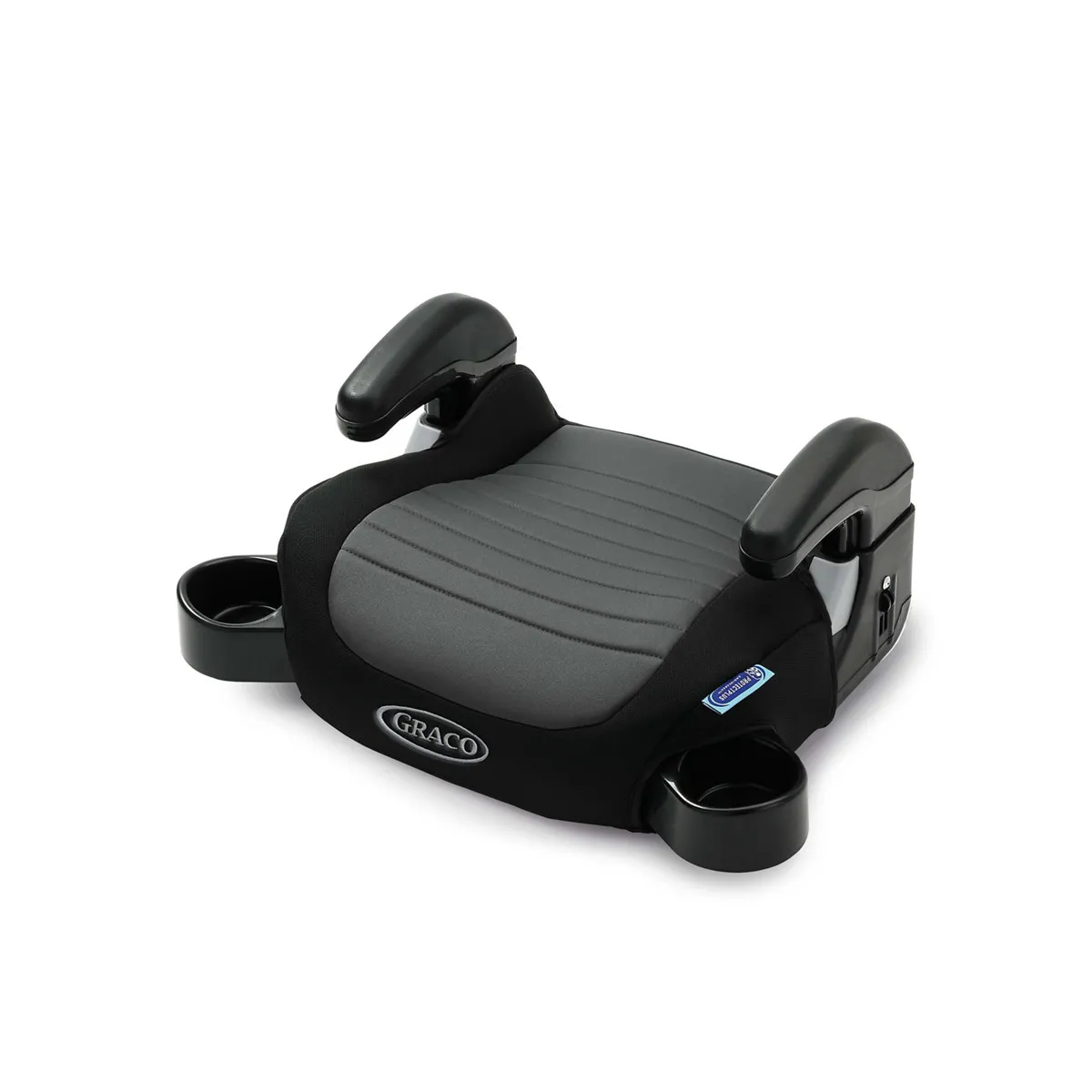
A simple, budget, belt-only backless booster with the same 40–100 lb and 43–57 in limits the TakeAlong had: a smart everyday or carpool booster, but it doesn't fold, so travelers should look elsewhere.
- Booster
What we like
The limits are simple: 40-100 pounds and 43-57 inches, so it can cover your child until the adult belt fits (typically around 4 feet 9 inches). A belt-positioning clip is included for when the shoulder belt needs help sitting in the right spot.
Two cup holders slide in and out, the armrests adjust in height and the cover is machine washable. It's light, about 5 pounds per retailer listings, there are no recalls on the 2.0 Backless, and it's very affordable.
Worth knowing
It doesn't fold, and there's no carry handle or carry bag, so it isn't the travel booster the TakeAlong was. There's no LATCH, so you have to buckle it with the seat belt even when no one is riding in it.
The armrests need a height-adjustment screw, both at assembly and every time you change their height. As a backless seat, it needs a vehicle seat back or headrest above your child's ears. Like every booster, it isn't FAA certified for airplanes.
Sometimes the right booster is the plainest one. The Graco TurboBooster 2.0 Backless Booster is Graco’s simplest backless seat: no back, no LATCH, no fold. It lifts your child so the vehicle’s lap-and-shoulder belt fits, and that’s the whole job.
The short version: it fits kids 40–100 lb and 43–57 inches tall who are at least 4 years old, the same limits the discontinued TurboBooster TakeAlong had. It comes with a belt-positioning clip, two cup holders and height-adjustable armrests, and it’s in the budget price band. What it doesn’t do is fold. If you loved the TakeAlong because it packed into a bag for trips and rideshares, this isn’t that seat.
This review is based on Graco’s owner’s manual for the backless edition (NWL0001463536B 5/23), the TakeAlong’s manual, NHTSA recall records and CPST reviews. We did not crash-test or install this seat ourselves.
TakeAlong owners: what changed
The TurboBooster TakeAlong is discontinued, and the TurboBooster 2.0 Backless now takes its spot on our backless booster list. Here’s an honest side-by-side, using only what we could confirm in the two manuals and CPST reviews.
What stayed the same
- The same limits. Both manuals list 40–100 lb, 43–57 in, at least 4 years old for backless use.
- Still belt-only, with no LATCH. The vehicle seat belt holds your child and the booster.
- The same belt-positioning clip, with the same rule: you must use it if the shoulder belt doesn’t sit in the right spot (more below).
- Buckle it when it’s empty, every time. Both manuals say so.
- A 10-year useful life from the date of manufacture.
- Not certified for aircraft, like every booster.
What you lose: the fold, the handle and the bag
This is the big one. The TakeAlong had a FastAction Fold strap: pull it up and the seat folded and clicked shut. CSFTL measured the folded backless TakeAlong at about 6 × 14 inches. It also had a carry handle built into the seat and came with a carry bag with a shoulder strap.
The TurboBooster 2.0 Backless has none of that. It doesn’t fold, there’s no handle and there’s no bag. There’s also no matching highback version; the TakeAlong came in backed and backless forms, while the 2.0 Backless is backless only. (If you want a back, see the TurboBooster 2.0 Highback.)
There’s one small upside. CSFTL reported that some kids started pulling the TakeAlong’s fold handle while riding. With no fold, that’s not a thing here.
If you need a booster that travels
If portability is why you bought the TakeAlong, look at the travel picks on our list instead: the mifold Grab-and-Go and the hiccapop UberBoost, both on our backless booster list. Check each seat’s own limits and belt-fit rules before you buy, since they work differently from a standard booster.
Backless vs. high-back: who should use which
Graco’s TurboBooster 2.0 family is easy to mix up, so here’s the plain version:
- TurboBooster 2.0 Backless (this seat): sold without a back. Belt-only. Best for kids who are already ready for a backless booster.
- TurboBooster 2.0 Highback: a highback that converts to backless, with the same 40–100 lb limits in both modes. Buy it if your child still needs a back, or your car lacks headrests.
- TurboBooster LX Backless with LATCH: a separate line that adds lower-anchor connectors to hold the empty booster in place.
Choose a high-back if your child is new to boosters, falls asleep in the car, or rides in a seat where the vehicle seat back or headrest doesn’t reach above their ears. A high-back adds a shoulder-belt guide and head support.
Choose a backless once your child sits upright for the whole ride and the vehicle seat gives proper head support. According to the manual, your child’s ears must be below the top of the vehicle seat back or headrest. Backless boosters are also easier to move between cars, which is why they’re popular for carpools and grandparents.
Is your child ready for a backless booster?
A booster lifts your child so the adult belt crosses the strong parts of the body: the lap belt low across the hips and upper thighs, and the shoulder belt across the middle of the shoulder, not the neck or belly.
The manual recommends keeping your child in a harnessed seat for as long as possible first. Move up once they’ve outgrown the harness and can sit still, without slouching or moving the belt, for the whole ride. The manual is blunt: if your child won’t keep the belt properly positioned, don’t use this booster. Check your state’s car seat laws and NHTSA’s booster guidance too.
What are the child size limits?
Here’s what the TurboBooster 2.0 Backless manual lists:
| Mode | Weight | Height | Age |
|---|---|---|---|
| Backless booster | 40–100 lb | 43–57 in | At least 4 years old |
When does your child stop needing a booster? According to the manual, once the vehicle belt fits on its own, typically when they reach 4 feet 9 inches tall and are between ages 8 and 12. Belt fit matters more than birthday. (You may see marketing age ranges like “4–10” or “4–12” on listings; those aren’t the limits.)
How safe is it?
According to the manual, the seat meets or exceeds all applicable requirements of FMVSS 213, the federal standard for car seats and boosters sold in the US. Graco also says the seat is engineered to its ProtectPlus standard to help protect in frontal, rear and rollover crashes; that’s Graco’s own claim, and we haven’t tested it.
The Insurance Institute for Highway Safety no longer rates boosters, and it has no rating for this seat. With any booster, safety comes down to belt fit in your car.
Recalls: No recalls for the TurboBooster 2.0 Backless as of NHTSA’s November 2026 data. The only TurboBooster recall, 16C-004 (2016), covered original TurboBooster units built Dec 22, 2015–Apr 5, 2016 whose instructions left out the buckle-it-when-empty rule. Those seats have now passed their 10-year useful life anyway.
And if your booster is ever in a crash, the manual says replace it. Don’t use it again.
How to get the belt fit right
There’s nothing to install. The booster sits flat on the vehicle seat, facing forward, and the vehicle belt does the work. According to the manual:
- Lap-and-shoulder belt only. Never use it with a lap-only belt.
- The lap belt goes under both armrests and lies low across your child’s hips and thighs. Never route the belt over the top of the armrests.
- The shoulder belt goes under the armrest on the buckle side and should cross between your child’s neck and the edge of the shoulder. Never put it under the arm or behind the back. Keep the belts flat, not twisted.
- Your child’s back sits flat against the vehicle seat back, with ears below the top of the vehicle seat back or headrest.
- No overhang. The front of the booster must not hang over the front of the vehicle seat, so check short seat cushions.
- Buckle the booster even when no one is in it. An unbuckled booster can hit someone in a crash. Because there’s no LATCH, this matters every single time.
The belt-positioning clip. If the shoulder belt falls outside the zone between the neck and the edge of the shoulder, you must use the included clip. Its strap loops through a slot on the bottom of the base. After you buckle, slide the clip onto the shoulder belt and adjust the strap so the clip sits right at the top of the shoulder.
The manual also rules out rear- or side-facing vehicle seats, and motorized or door-mounted belts.
Assembly, armrests and cup holders
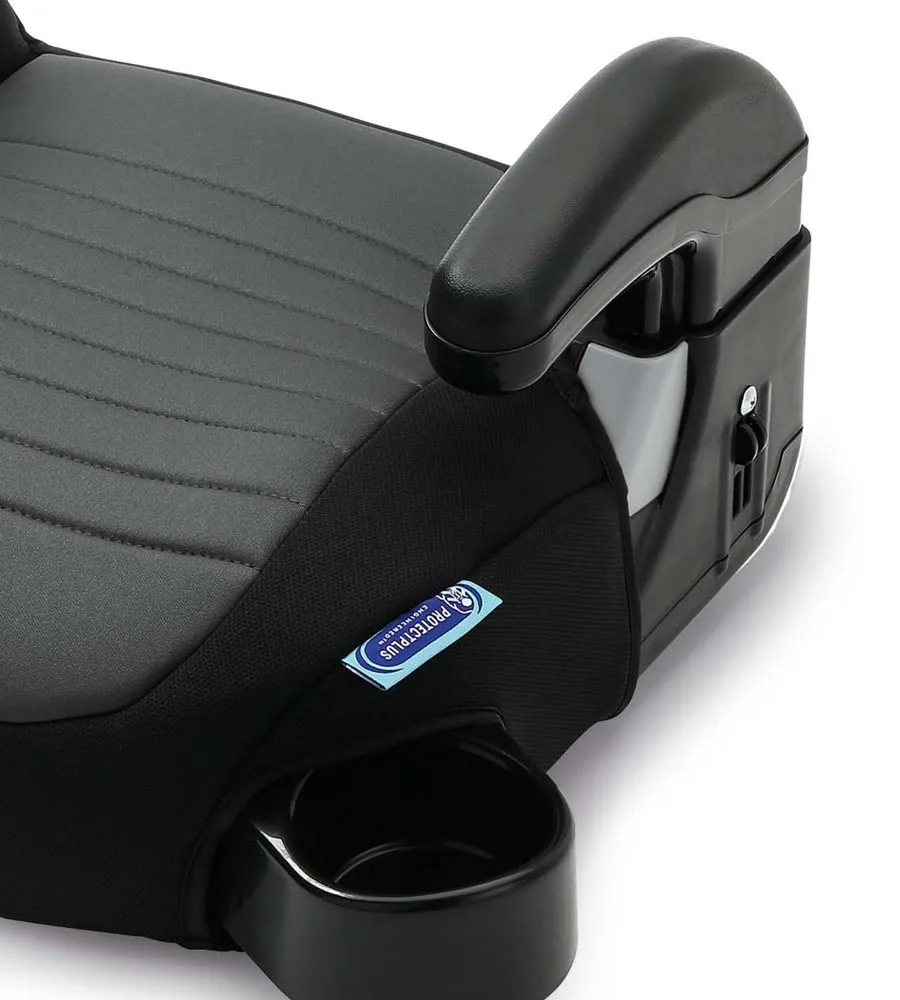
Image: Graco
You assemble the armrests yourself. Each one snaps into the base at the height you choose and is locked with a height-adjustment screw; the manual’s illustration shows a screwdriver. To change the height later, you remove the screw, press the button on the side of the base, move the armrest and screw it back in. Then pull up on the armrests to check they’re secure. Keep the screws.
There are two cup holders that slide in and out of the base (Graco calls them “hide-away”). There’s also a slot in the seat to store the manual, so it stays with the booster.
At about 5 lb, per retailer listings, it’s easy for kids to carry to a friend’s car. The flip side: a light booster can shift as kids climb in, which is one more reason to buckle it when empty.
Comfort and cleaning
The padding is simple. CSFTL found the TakeAlong, an earlier member of the same family, wasn’t heavily padded, and we found no CPST review of this exact seat, so think of it as an everyday booster rather than a road-trip throne. According to the manual, you can machine wash the cover in cold water on a delicate cycle and drip-dry it. Don’t use bleach.
The 10-year useful life is counted from the date of manufacture, printed on a label on the back of the seat.
BestCarSeatHub’s Final Verdict
The TurboBooster 2.0 Backless is a no-fuss, affordable, belt-only backless booster with clear limits. For TakeAlong fans, it’s an honest trade: the same fit and the same clip at a lower price band, without the fold or the bag.

- 40–100 lb, 43–57 in, ages 4 and up
- Belt-positioning clip included
- Two slide-out cup holders and height-adjustable armrests
- Light, about 5 lb per retailer listings
- Machine-washable cover
- No recalls on the 2.0 Backless
- Budget-friendly price

- Doesn’t fold, with no carry handle or bag (unlike the TakeAlong)
- No LATCH, so you have to buckle it even when it’s empty
- Armrests need a screw to assemble and adjust
- Needs a vehicle seat back or headrest above your child’s ears
- Not FAA certified (no booster is)
Who it’s for
- Families who want a budget backless booster for daily driving, a second car, carpools or the grandparents
- Kids who are at least 4, 40 lb and 43 in, who have outgrown their harness and sit still for the whole ride
- Former TakeAlong owners who didn’t really use the fold
Who should skip it
- Frequent travelers and rideshare families: compare the mifold Grab-and-Go and the hiccapop UberBoost on our backless booster list
- Kids who still need head support, or cars without rear headrests: get the TurboBooster 2.0 Highback
- Parents who want LATCH to hold the empty booster: look at the LATCH backless boosters on our list
Bottom line: if you need a dependable backless booster that stays in the car, the Graco TurboBooster 2.0 Backless is an easy, affordable pick. See how it stacks up in our best backless booster seats guide.
- Backless booster weight
- 40–100 lb
- Backless booster height
- 43–57 in
- Minimum age
- At least 4 years old
- When to stop using a booster
- When the adult belt fits, typically about 4 ft 9 in and ages 8–12
- Installation
- Vehicle lap-and-shoulder belt only (no LATCH)
- Belt-positioning clip
- Included
- Armrests
- Height-adjustable, set with a screw
- Cup holders
- 2, slide in and out
- Folds
- No
- FAA certified
- No
- Useful life
- 10 years from date of manufacture
- Cover care
- Machine wash cold, delicate cycle, drip-dry
- Federal standard
- Meets FMVSS 213 (per the manual)
- Model number
- 2184500 (Denton)